Uber: Deploying ChatGPT Work to 30,000 Staff Exposes Enterprise Inference Realities
Uber deploys OpenAI's ChatGPT Work across its 30,000 global corporate workforce, leaning on GPT-6.1 Sol and internal engineering pods while keeping inference costs and governance guardrails strictly confidential.
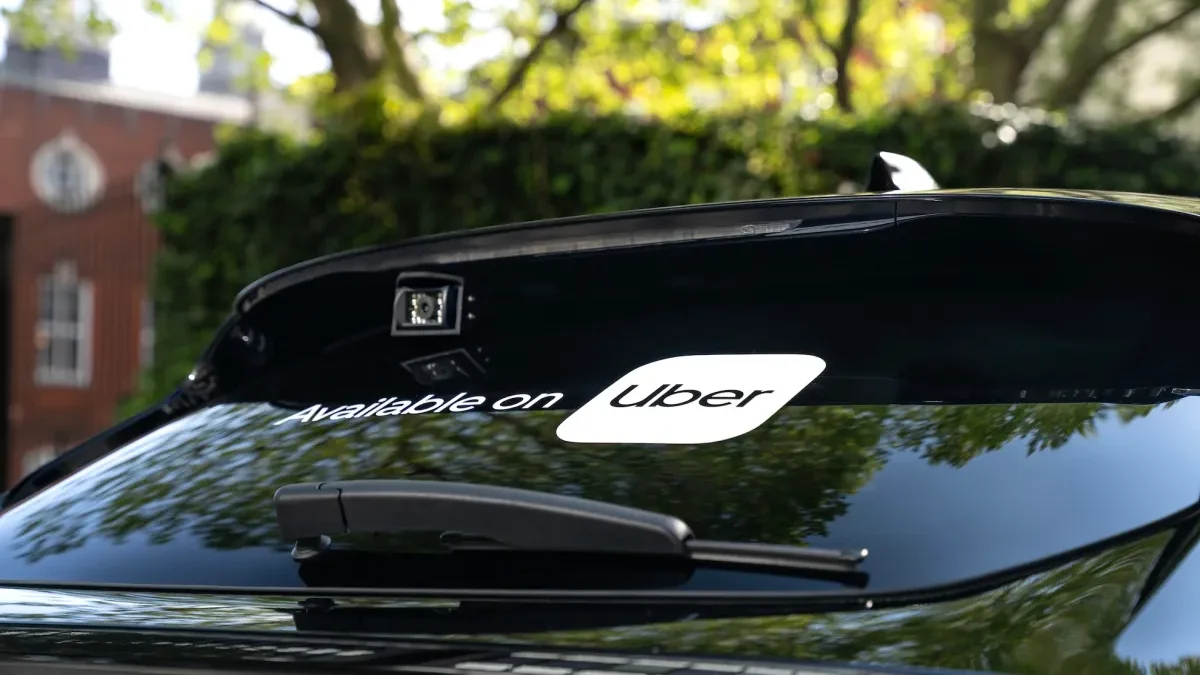
Uber and OpenAI expanded their corporate deployment on October 22, 2026, rolling out the ChatGPT Work enterprise agent platform across Uber's entire global workforce of roughly 30,000 employees, TechCrunch reported.
The transition shifts artificial intelligence inside the ride-hailing company from experimental sandboxes into core operational middleware. Powered primarily by OpenAI’s GPT-6.1 Sol model rather than costly reasoning flagships, the deployment marks the technology sector's largest documented stress test for multi-step autonomous workflows outside conventional software engineering environments. Across corporate directories worldwide, enterprise leaders are watching whether autonomous agents can deliver tangible return on investment across non-technical workflows.
The Anatomy of a 30,000-Seat Agentic Rollout
OpenAI introduced ChatGPT Work in July 2026 as a task-oriented agent platform designed to execute multi-step corporate deliverables rather than exchange single-turn chat responses. Unlike legacy conversational interfaces that produce isolated blocks of text, the system integrates directly with corporate backends to assemble finished spreadsheets, operational briefs, and presentation decks across extended execution runs.
Uber initially piloted the software earlier in 2026 with a controlled cohort of 1,000 employees.
Internal usage data demonstrated that approximately 80% of those early adopters were non-technical staff working across finance, marketing, product management, and regional operational divisions. That demographic distribution challenged the common industry belief that generative software tools primarily benefit software developers. The pilot revealed that administrative and operational teams generated the highest volume of recurring queries.
The expansion to all 30,000 global corporate workers represents a thirtyfold increase in active seat allocations. Scaling agentic software to this volume tests whether autonomous background workers can deliver measurable productivity dividends across administrative departments without overwhelming internal technical support.
Inside the AI Pods: Pairing Specialists with Operational Workflows
To prevent the software from sitting idle across non-technical desks, Uber deployed a hands-on enablement model during its initial testing phase.
Technical specialists embedded directly with operational staff to map practical bottlenecks before designing automated routines. The company paired 30 dedicated artificial intelligence engineers with operational departments for two weeks, forming cross-functional teams labeled 'AI pods' to identify and automate repetitive corporate friction.
Sumanth Sukumar, Uber’s vice president of engineering, explained that early users focused on analytical heavy lifting, document conversion, and operational oversight. “They used it for a wide range of tasks: analyzing complex data from our operations to identify trends and develop recommendations; localizing training materials for different markets and languages; and building personalized interactive dashboards to manage their daily work,” Sukumar told TechCrunch.
The engineering pod model achieved a support density of roughly one artificial intelligence specialist for every 26 non-technical workers during the 1,000-seat pilot.
That dynamic underscores an unadvertised operational reality in modern corporate software deployments: autonomous enterprise agents are rarely self-deploying systems. Achieving durable workflow automation required intensive human engineering hours to configure context boundaries, structure task briefs, and validate workflow outputs before business units could operate independently. Without continuous human guidance in early configuration, multi-step workflows frequently derail when parsing conflicting enterprise data.
The Inference Economy: Why GPT-6.1 Sol Powers the Workspace
Scaling an agentic layer across 30,000 seats introduced immediate compute and financial constraints.
While OpenAI’s flagship GPT-6 Astra leads industry benchmarks in deep mathematical reasoning, its heavy token consumption and inference latency render continuous background execution economically prohibitive across a global corporate directory. Uber opted for GPT-6.1 Sol as the default engine running beneath ChatGPT Work. The architectural choice mirrors an enterprise shift toward cost-balanced inference.
Sol delivers high-throughput computer-use, structured data synthesis, and professional document drafting at roughly one-fourth the computational footprint of frontier reasoning architectures.
Meanwhile, Uber maintained an air gap for software development. The company’s core engineering organization continues to rely on OpenAI’s Codex engine for source-code synthesis, preventing general-purpose administrative agents from modifying core production repositories.
Data Governance and Unanswered Economics in Enterprise Agents
ChatGPT Work connects directly into corporate collaboration software, establishing native hooks across Slack, Google Drive, Gmail, and Google Calendar. By parsing company communication channels and file repositories, the agent pulls operational context autonomously to answer corporate queries and draft cross-functional briefs.
This level of ambient context integration presents persistent data loss prevention and privilege management hurdles.
Enterprise administrators must continuously police how autonomous agents query internal communications to ensure staff cannot extract confidential payroll records or sensitive business metrics through natural language prompts. Operating across thousands of connected accounts demands strict identity boundaries.
Uber did not disclose its total capital outlay or per-seat license costs for the 30,000-seat agreement. Sukumar stated that leadership plans to measure return on investment dynamically: “We’ll look at how employees are using the technology, the kinds of workflows they develop and how it helps them work more effectively. We’ll evaluate those outcomes and use what we learn to guide how we deploy AI across the business.”
The massive enterprise software procurement also unfolds against broader labor restructuring across platform businesses. In September 2026, Uber eliminated 3,300 customer support and administrative positions, reflecting an industry-wide pivot away from human customer operations toward recurring cloud infrastructure licensing.
Operational Metrics and the Verification Horizon for Autonomous Workflows
Uber’s company-wide deployment now faces the pragmatic reality of empirical measurement.
While early pilot cohorts demonstrated productivity gains in localized report generation and curriculum translation, scaling across thousands of non-technical workers introduces compounding risks of silent factual hallucinations in operational tracking. Executive management continues to audit weekly workflow telemetry across divisions to determine whether autonomous agents deliver verifiable corporate efficiency.
Enterprise IT departments across the technology sector will track Uber's ongoing audit data as the primary benchmark for whether agentic software can justify recurring inference capital beyond software engineering silos.
Was this article helpful?
Your feedback helps our editorial team refine reporting depth and accuracy.
Related Articles
Oct 18, 2026
Google Antigravity: Claude Opus 5.5 Integrates Across IDEs as Legacy Models Face November Retirement
Google Cloud integrates Anthropic frontier reasoning into Antigravity IDEs, introducing pay-as-you-go overages while legacy models face a November 2 retirement deadline.
Oct 16, 2026
Gemini to Google Sites: The Engineering Architecture Behind One-Click App Publishing
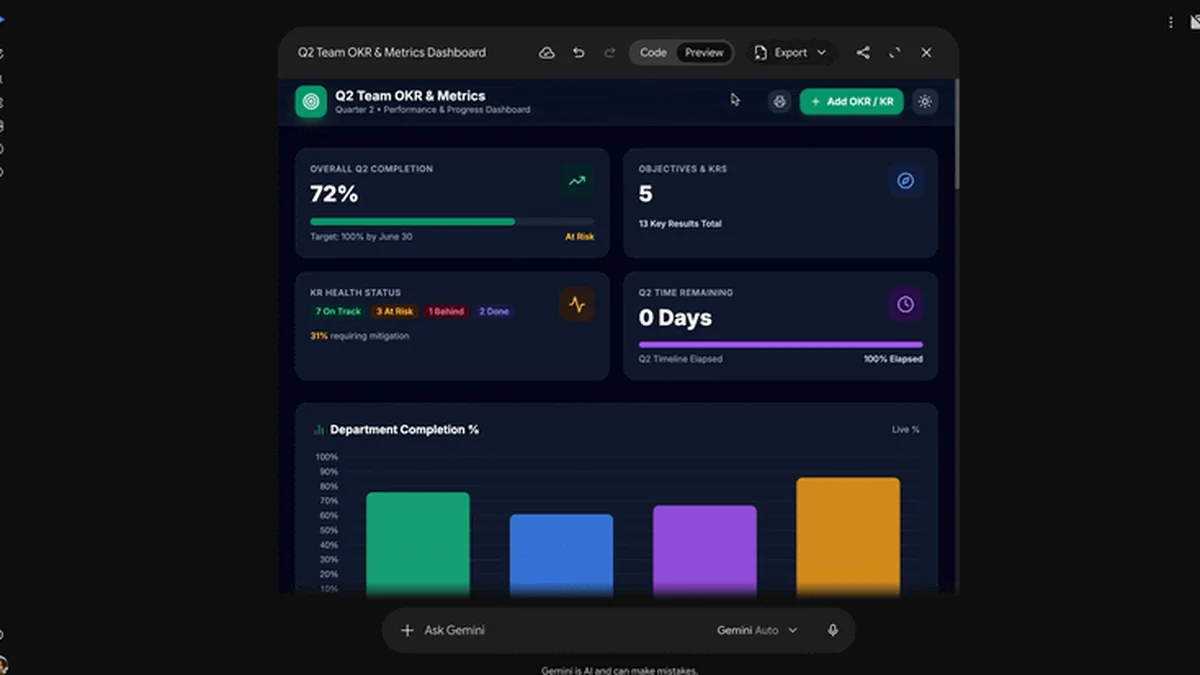
Google officially connects Gemini interactive applications directly to Google Sites drafts in a single click, shifting generative UI from isolated chat sandboxes to enterprise intranets governed by Google Drive ACLs.
Oct 15, 2026
Anthropic: The $90 Billion Compute Gamble Behind the Nscale Expansion
Negotiations for a second $45 billion compute commitment at West Virginia's Monarch campus double Anthropic's exposure to independent cloud infrastructure as pre-IPO scrutiny mounts over multi-gigawatt capital expenditure.