Anthropic: The $90 Billion Compute Gamble Behind the Nscale Expansion
Negotiations for a second $45 billion compute commitment at West Virginia's Monarch campus double Anthropic's exposure to independent cloud infrastructure as pre-IPO scrutiny mounts over multi-gigawatt capital expenditure.
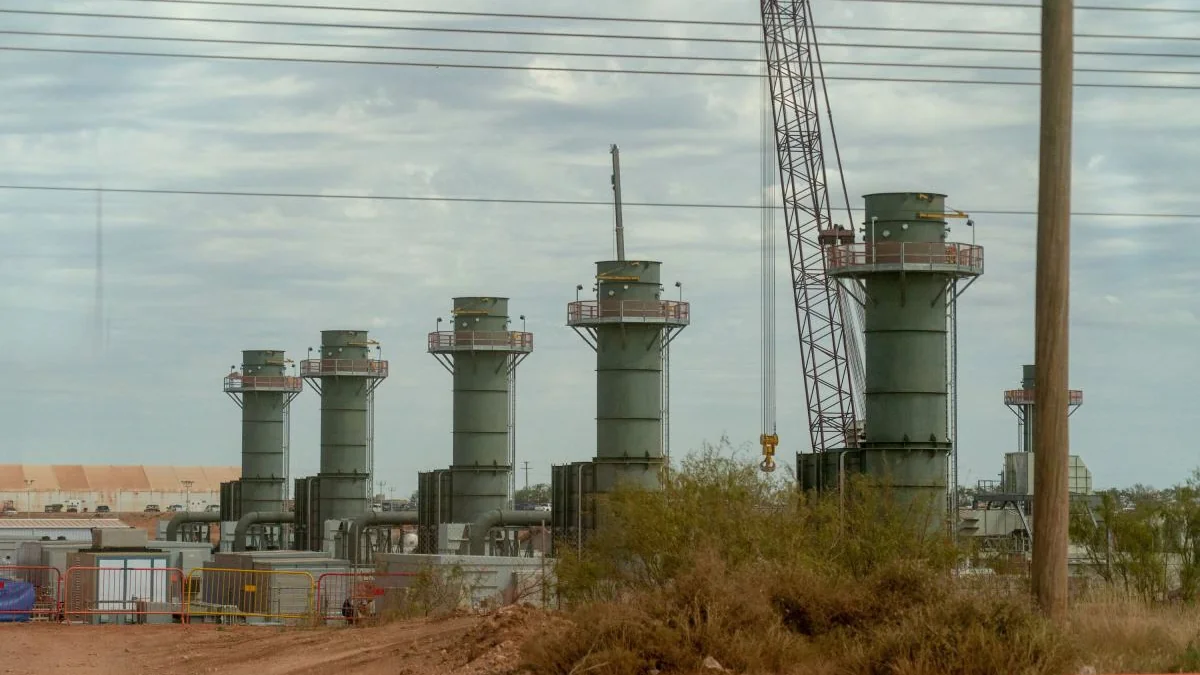
Anthropic is in advanced negotiations to secure a second $45 billion cloud computing agreement with specialized infrastructure provider Nscale, Bloomberg reported on October 19, 2026. The prospective contract, corroborated by reporting from TechCrunch, would effectively double the artificial intelligence lab’s financial exposure to the independent operator, lifting its cumulative commitments to an aggregate $90 billion across a single multi-gigawatt development and setting a new high-water mark for private compute leasing.
The discussions center on leasing the entire second facility at Nscale’s Monarch Compute Campus in Mason County, West Virginia. Coming just weeks after an initial $45 billion deployment agreement finalized in September 2026, the proposed expansion highlights how rapidly frontier model laboratories are exhausting the physical capacity of traditional hyperscale environments. As Anthropic prepares for an initial public offering expected later this year, securing guaranteed access to multi-megawatt computing blocks has superseded near-term balance-sheet conservatism. Institutional investors are watching closely as long-term compute liabilities increasingly dictate pre-IPO valuations.
Anatomy of the Monarch Deal: 460 Megawatts and Vera Rubin Hardware
Building 2 at the Mason County site features a specialized high-density data center footprint rated for 460 megawatts of continuous critical IT power, configured for extreme cluster densities.
Unlike conventional enterprise cloud facilities that mix varied customer workloads across standardized air-cooled rows, the entire structural envelope integrates direct-to-chip liquid cooling systems that dissipate thermal loads exceeding 100 kilowatts per rack. Deliveries and physical installation schedules align with commercial fabrication timelines for high-performance silicon and ultra-low-latency optical interconnect fabrics. That hardware density requires dedicated electrical feeds and closed-loop heat rejection loops installed for continuous deep-learning training runs without thermal throttling.
Nscale specifies Nvidia’s forthcoming Vera Rubin accelerator platform across the second facility, marking one of the earliest committed commercial allocations for the next-generation architecture across the industry. Furthermore, the negotiated terms grant Anthropic a contractual right of first refusal on a planned third building at the Monarch campus, opening a clear path to control more than a full gigawatt of dedicated computing capacity at a single geographical site under a coordinated multi-phase operational roadmap.
The Microsoft Vacuum: How Anthropic Inherited a Stalled Megasite
Anthropic’s aggressive expansion in West Virginia capitalizes directly on a strategic retreat by Microsoft. Earlier in 2026, Microsoft signed a non-binding letter of intent to lease 1.35 gigawatts across the Monarch campus, but quietly withdrew from the arrangement following complications regarding transmission timelines and local environmental permitting. That sudden vacancy provided Nscale with an urgent need to replace an anchor tenant and handed Anthropic leverage to secure massive contiguous capacity. Relying on primary hyperscale partners Amazon Web Services and Google Cloud remains insufficient when those platforms face regional power rationing across traditional data center corridors.
To circumvent interconnection queues within the regional PJM Interconnection grid that routinely extend past five years, Nscale structured the Monarch site around an on-site natural gas microgrid. By tapping local Appalachian fuel reserves directly behind the utility meter, the facility secures base-load generation independent of public electrical substation upgrades and regional transmission congestion. However, that reliance on dedicated fossil generation provoked localized emissions scrutiny, creating corporate sustainability friction that Microsoft’s leadership ultimately chose to avoid.
When compute supply dictates foundation model capability in competitive benchmarks, physical energization dates take operational precedence over clean-energy timelines.
The Economics of AI Neoclouds: Valuation Pressures and IPO Timelines
The expansion comes at an intricate juncture for Nscale, which is actively preparing a United States initial public offering seeking a valuation of $30 billion. Bloomberg reported on October 19, 2026, that prospective institutional investors have expressed hesitation regarding that target, citing the company’s heavy capital expenditure requirements and elevated debt leverage. For an infrastructure operator carrying massive financing obligations, converting non-binding interest into a binding, bankable $45 billion customer backlog is essential to validating its market valuation.
Specialized AI infrastructure providers typically fund bulk purchases of advanced accelerators through special-purpose debt vehicles collateralized directly by physical hardware. The viability of these debt facilities depends on multi-year customer commitments that guarantee steady revenue streams to service high-yield interest payments. Yet tying nearly the entire initial revenue base to a single frontier laboratory concentrates counterparty risk, leaving the infrastructure provider acutely vulnerable to any hardware delivery delays, power commissioning slips, or contractual disputes. If delivery milestones slip, debt service costs continue to accrue against idle physical assets, squeezing liquidity before production clusters generate cash.
Anthropic faces its own operational risks as it approaches public markets with substantial contractual overhead. Carrying $90 billion in long-term compute obligations creates massive take-or-pay liabilities that establish a multi-billion-dollar annual carrying cost regardless of whether enterprise software adoption expands quickly enough to preserve operating margins, forcing executive leadership to justify immense capital burn during investor roadshows.
Capital Allocation Realities in the Frontier Model Race
Negotiations between Anthropic and Nscale remain underway, with specific delivery milestones, penalty clauses, and power ramp schedules subject to final adjustment before formal signing. Both companies will eventually need to outline the binding nature of these commitments in audited S-1 registration statements filed with the Securities and Exchange Commission prior to their respective public listings. Those regulatory filings will provide the first public, verifiable view of how take-or-pay reservation fees and volume discounts are structured against delivered compute milestones across multi-year cycles.
Physical power availability and access to high-density silicon clusters have supplanted algorithmic experimentation as the primary competitive barrier across enterprise artificial intelligence. By pursuing an extensive $90 billion infrastructure footprint with an independent neocloud operator, Anthropic is wagering that uninterrupted physical power and silicon access will determine market leadership in the agentic software economy.
Was this article helpful?
Your feedback helps our editorial team refine reporting depth and accuracy.
Related Articles
Oct 13, 2026
OpenAI: Rushing $30 Billion Round at $1.4 Trillion Valuation to Preempt Anthropic IPO
OpenAI accelerates a $30 billion private funding round at a $1.4 trillion valuation, seeking sovereign capital to lock up balance sheets before Anthropic mid-November IPO.

Oct 11, 2026
The Telemetry Leak: Why AI Chatbots Expose Sensitive Session Data to Ad Trackers
An empirical network audit reveals nine major conversational AI tools routinely expose chat titles, session permalinks, and hardware identifiers to 44 adtech trackers.

Oct 10, 2026
Gemini 4 Argon: Google DeepMind Agents Beat Minecraft Across 27 Hours and 1.35 Billion Tokens
Four Gemini 4 Argon agents completed Minecraft end-to-end without human intervention, but the 27-hour run consumed 1.35 billion input tokens and suffered 605 in-game deaths.