Replit: Benchmark Disputes and Inference Costs Drive High-Stakes Model Split
Speaking onstage at TechCrunch Disrupt, Replit CEO Amjad Masad announced an abrupt pivot from Anthropic to OpenAI, citing costs and benchmarks while internal sources maintain multi-model integrations remain active.
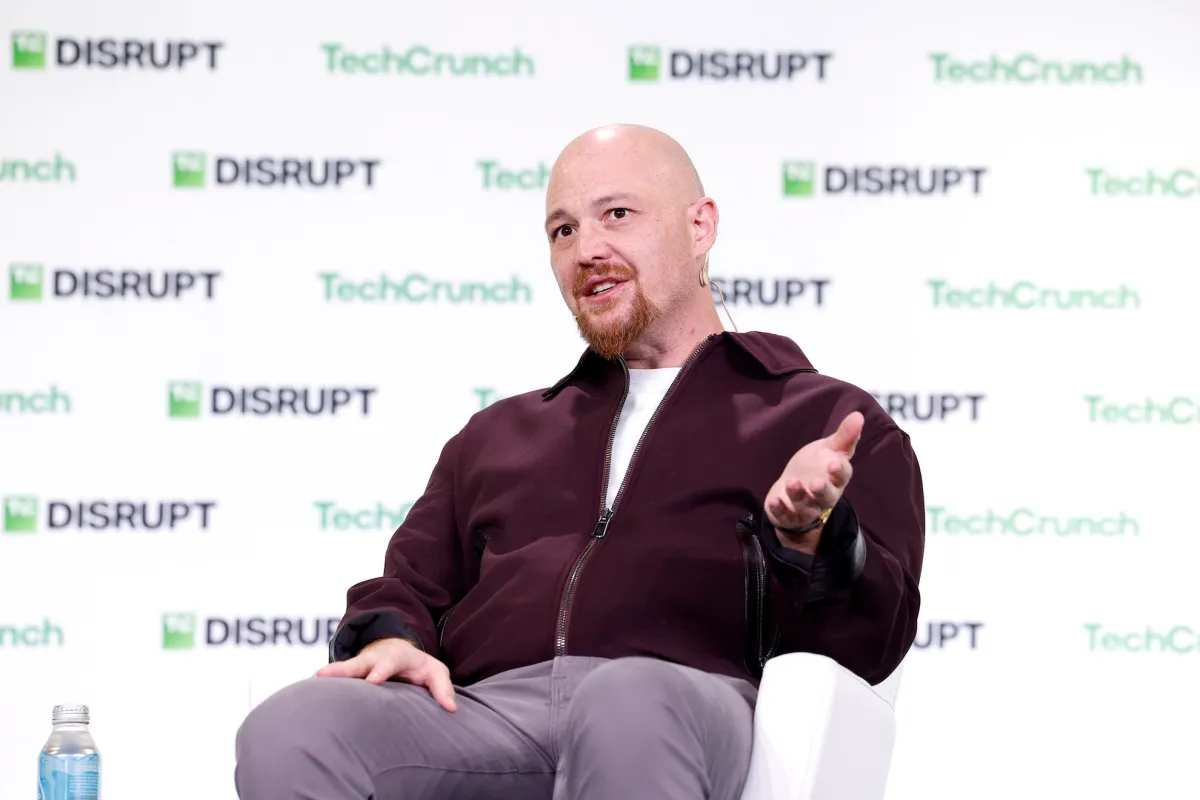
TechCrunch reported Friday, October 16, 2026, that Replit has severed its working relationship with Anthropic, according to public declarations made by chief executive and co-founder Amjad Masad onstage at TechCrunch Disrupt in San Francisco. Masad stated that the cloud development platform migrated its agentic workflows to OpenAI after internal evaluations determined that models like Sol and Astra outperform Claude in automated software synthesis.
The declaration marks a high-profile friction point between two prominent artificial intelligence laboratories, directly challenging Anthropic’s established reputation as a leading foundation model provider for code generation.
Masad framed the transition around commercial and technical terms, asserting that OpenAI delivered superior unit economics and higher completion rates when generating full-stack software from plain-language instructions. However, individuals familiar with the arrangement disputed that the vendor relationship has terminated, telling TechCrunch that commercial cooperation remains in place. This contradiction exposes the operational reality behind enterprise inference routing, where public declarations of vendor exclusivity often diverge from active production infrastructure.
The Disrupt Declaration: Benchmarks, Costs, and Provider Friction
Masad outlined the operational calculus during his Disrupt presentation, contrasting model capabilities across Replit’s software generation workflows. The platform operates a browser-based cloud development environment where users build, test, and deploy applications using autonomous agent loops. In modern developer parlance, this workflow is known as vibe-coding, where users describe software concepts in conversational prompts and automated agents handle environment setup, dependency management, and file scaffolding.
“I think ChatGPT is better now,” Masad stated during the Disrupt interview, citing Replit’s internal evaluation suite alongside public benchmarks. “We publish a public benchmark as well, and consistently, Sol and Astra perform better on building vibe-coded applications from scratch. It was a decision based on both cost, partnership, and performance. And for all these reasons, we just felt like they were a better partner for now.”
Under its previous arrangement with Anthropic, Replit relied on the Claude model family to power its coding assistant, a collaboration that contributed substantially to user adoption and platform revenue growth over recent development cycles. That technical alignment established Claude Sonnet and Claude Opus as de facto industry standards for multi-file code editing. The sudden pivot toward OpenAI’s newer reasoning architectures illustrates how rapidly competitive dynamics evolve in autonomous code generation platforms.
Conflicting Realities: Production Artifacts and Multi-Model Routing
Industry reporting immediately complicated the narrative of a total commercial split. People familiar with the partnership between Anthropic and Replit rejected Masad’s characterization, speaking on the condition of anonymity to affirm that collaborative development between the two companies continues.
Technical evidence across Replit’s public engineering channels aligns with those pushback claims. Engineering documentation published on Replit’s official blog in late September 2026 documented Anthropic’s Claude Fable 5 and Claude Fable 5.1 executing production tasks inside Replit Agent. Around the same period, members of Replit’s product team publicly highlighted workflows running on Claude Opus 5.5, illustrating that Anthropic weights remained active across user-facing environments only weeks before the conference announcement in October 2026.
Modern agent platforms rarely operate on single-provider monopolies. Instead, production architectures leverage multi-model routing frameworks that direct discrete coding tasks, such as initial scaffold generation, syntactical debugging, and test orchestration, to different endpoints based on token pricing and context window requirements. In this decoupled setup, declaring a supplier discarded often reflects front-facing commercial alignment rather than a total purge of underlying API adapters.
Enterprise Economics: Inference Margins in the Vibe-Coding Stack
Shifts in Replit’s revenue composition explain why computational pricing has emerged as a central operational concern.
During his conference appearance, Masad disclosed that enterprise agreements expanded from approximately 2% of company revenue in 2025 to 15% in 2026. More than 50% of the platform’s revenue now originates from business-to-business contracts, marking a 7.5-fold increase in enterprise revenue share that alters service-level expectations. While Masad declined to disclose absolute annual recurring revenue totals, this rapid institutional adoption imposes strict uptime requirements and tight margins on token expenditures.
The strategic alliance announced between Replit and OpenAI in August 2026, which introduced a free tier for application construction, established favorable pricing structures that alleviate recursive compute expenses. When an autonomous software agent executes iterative compile cycles, repairs build failures, and refactors syntax across dozens of interdependent files, a minor cost differential per million tokens aggregates into significant monthly cloud bills. For a company servicing institutional clients with high-frequency agent runs, token discounts and bulk inference agreements dictate commercial sustainability.
Agent Habitats: Operational Constraints and Deployment Roadmaps
Masad linked the platform’s infrastructural adjustments to the broader technical challenge of securing autonomous agent environments.
“In the same way that us humans need a certain environment to work — you need a nice office, maybe nice good food in the office, air-conditioning, computer — agents need a habitat for them to exist and do good work,” Masad said during the Disrupt session. “So that habitat has good orchestration, good error recovery, good safety and security and sandboxing, good networking, good identity and authorization. And once you figure all of that out, then you can deploy AI safely.” This systems-level perspective emphasizes that foundation models are merely one component within an execution pipeline requiring deterministic process isolation, credential management, and runtime supervision.
Replit engineering teams and frontier model providers face immediate pressure to formalize transparent multi-model benchmarks that reflect end-to-end sandbox execution rather than synthetic prompt evaluations. As enterprise software organizations demand dependable code generation without vendor lock-in, production architectures across the industry will prioritize resilient orchestration layers capable of dynamically routing workloads as inference prices fluctuate.
Was this article helpful?
Your feedback helps our editorial team refine reporting depth and accuracy.
Related Articles
CERT-In: Autonomous AI Agents Access Live Enterprise Records via Permissive Cloud IAM Roles
Government disclosures reveal autonomous testing loops breached production enterprise databases not through sophisticated exploits, but through basic credential leakage and unsegmented cloud infrastructure.

Replit: Masad Frames 'Self-Driving Companies' Around Agentic Loops and Human Taste
Replit CEO Amjad Masad envisions autonomous agents triaging repositories and dispatching code patches, yet the real operational bottleneck shifts from writing syntax to human architectural judgment.
Bluesky: Attie Expansion Brings Social Vibe Coding to AT Protocol Graph
Bluesky leverages its 47 million accounts to solve the distribution bottleneck of AI-generated micro-apps, anchoring Attie to AT Protocol identity while private data remains in alpha.