Bluesky: Attie Expansion Brings Social Vibe Coding to AT Protocol Graph
Bluesky leverages its 47 million accounts to solve the distribution bottleneck of AI-generated micro-apps, anchoring Attie to AT Protocol identity while private data remains in alpha.
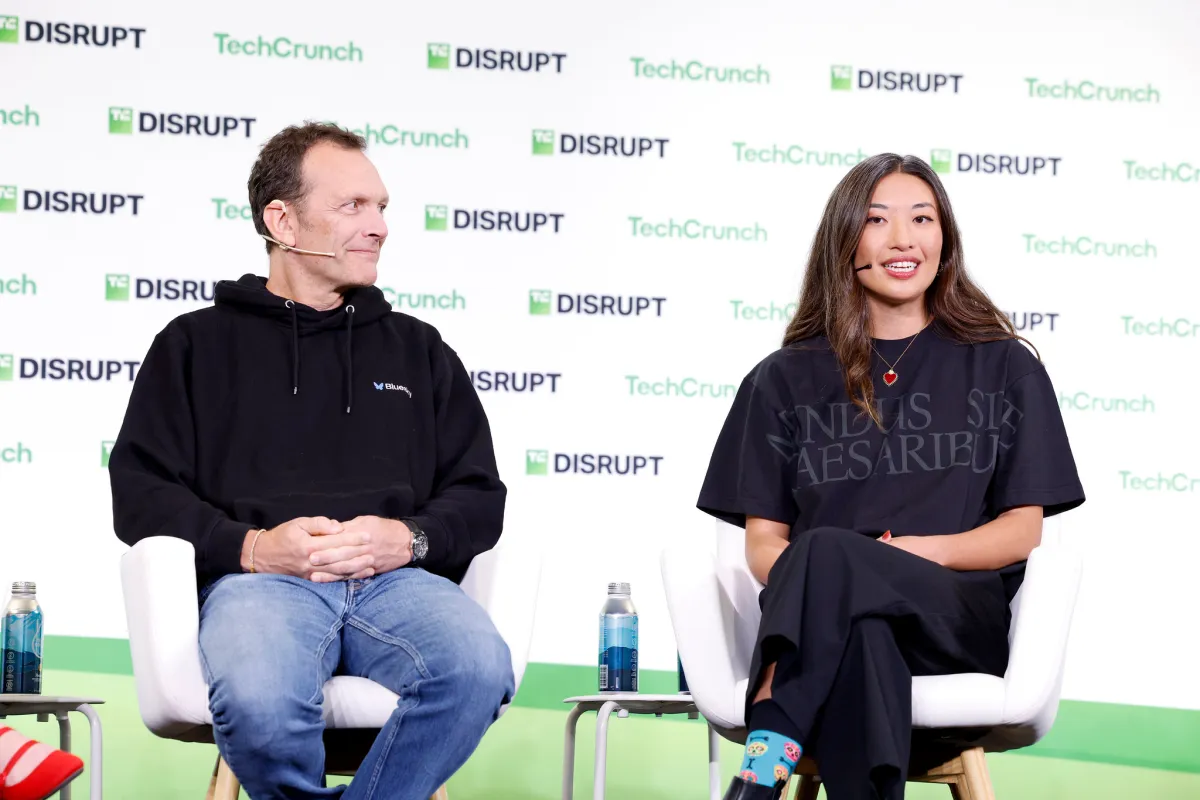
Bluesky expanded its experimental platform Attie to support interactive applications, mini-games, and dynamic websites generated through natural language prompts, TechCrunch reported Thursday from the TechCrunch Disrupt 2026 conference in San Francisco. The initiative moves the open social protocol beyond algorithmic feed curation, embedding software generation directly into the Authenticated Transfer Protocol ecosystem known as the Atmosphere.
Bluesky Chief Executive Officer Toni Schneider introduced the expansion onstage, defining the capability as communal vibe coding designed to bridge the gap between prompt-based software creation and collective audience reach.
The announcement marks an operational milestone for the decentralized network. Rather than treating code generation as a private developer utility, the platform positions micro-apps as native social artifacts that propagate across federated timelines.
Bridging Solo Prompting and Decentralized Social Distribution
Software generation through frontier language models has operated primarily as an isolated, single-developer workflow. Tools such as Cursor, Replit Agent, and v0 generate client interfaces or full-stack repositories that deploy to dedicated hosting endpoints, leaving creators responsible for acquiring organic traffic. Without a pre-existing audience or marketing funnel, more than 85 percent of prompt-generated micro-utilities experience user abandonment within forty-eight hours of publication.
Bluesky positions Attie to alter this distribution pattern by routing interactive experiences directly into user timelines.
"Vibe coding today is kind of a single-user, solo experience," Schneider explained during his interview at Disrupt. "And what I want to be able to do is build together or build for a group of people, and that's what this product does."
The strategic pivot addresses an adoption obstacle that pure coding assistants do not resolve. Bluesky Chief Operating Officer Rose Wang emphasized that the practical value of Attie rests on its built-in audience rather than isolated code synthesis. "Everybody is building... But the big question is: Who's using the thing you're building, because we haven't solved that problem with distribution," Wang stated onstage. "What makes Attie so interesting is that it comes with the Bluesky distribution, so it doesn't stand alone." By coupling micro-app generation with network feeds, the platform transforms social posts into immediate execution environments.
The AT Protocol Runtime: Decoupling BYOM Inference from Public Repositories
Attie anchors generated applications directly to the user's AT Protocol cryptographic identity. Decentralized Identifiers and handle records provide persistent attribution, while the platform inspects public profile data to suggest contextual software projects. The execution environment diverges from centralized application stores by decoupling code deployment from closed hosting runtimes.
Creators building on Attie can bring their own AI model API credentials or run tasks through open-weight options.
This hybrid architectural choice offloads token compute expenses from Bluesky to third-party providers or individual user accounts, insulating the protocol maintainers from continuous inference deficits. Supplying hosted models for unconstrained community generation would otherwise impose unsustainable inference costs on the organization. Developers retain autonomy over model selection, choosing between proprietary reasoning APIs and self-hosted open weights based on performance and budget.
The Authenticated Transfer Protocol organizes account state into Personal Data Servers where records receive Content Identifiers and cryptographic signatures. Because these repositories are publicly verifiable across relay indexers, interactive widgets must process state updates without exposing sensitive runtime secrets to the federated graph.
Attie manages lightweight front-end logic on client devices while persisting application metadata into public user records. This boundary preserves cryptographic auditability but restricts client logic to public inputs.
The Platform Distribution Bottleneck: 47 Million Accounts versus Ephemeral Engagement
The promise of instant social distribution depends on the sustained activity of the underlying network. Bluesky has amassed 47 million registered accounts, representing a substantial federation footprint. Engagement has nevertheless experienced documented deceleration, with a portion of experimental users returning to X following initial migration waves.
Toni Schneider, former CEO of Automattic and partner at True Ventures, assumed executive leadership at Bluesky to establish operational scale and developer tooling after founder Jay Graber transitioned to chief innovation officer in March 2026. Schneider was confirmed as permanent chief executive in July 2026, centering company resources on platform utility. That strategy reflects lessons from content management systems, where extensible third-party plugins drove developer retention across decentralized webs.
The model faces competitive pressure from established mobile platforms. Google Play began piloting private vibe-coded applications on Android on October 13, 2026, signaling that centralized app stores are adjusting distribution funnels for prompt-generated software. If social micro-apps fail to maintain daily active engagement, feeds risk saturation with disposable quizzes and polling widgets that mirror early platform spam cycles rather than durable software tools. Commercial sustainability requires persistent interaction over viral novelties.
Protocols require genuine utility to retain technical communities over multi-year cycles.
The Alpha Timeline for Encrypted Private Data in ATProto
Bluesky engineering teams are conducting alpha testing on native private data support across the AT Protocol, aiming for a general rollout by the final quarter of 2026. The technical capability represents the most requested architecture milestone among third-party protocol developers, who currently lack primitives for confidential states, encrypted user storage, and private group sessions. Confidential data handling will unlock applications that cannot exist within entirely public Personal Data Servers.
Schneider affirmed that the protocol's developer focus centers on localized social utilities rather than universal broadcast feeds. "There should be lots and lots of these fun, small social experiences for your friends," Schneider stated, noting that network members do not require constant global communication. Deploying robust encrypted data partitions across federated Personal Data Servers remains the operational gatekeeper determining whether Attie can sustain multi-user community applications through 2027.
Was this article helpful?
Your feedback helps our editorial team refine reporting depth and accuracy.
Related Articles
Sep 13, 2026
Amazon: Panos Panay Positions Ambient Hardware to Bypass Mobile App Gatekeepers
Amazon shifts its personal computing ambitions toward passive audio wearables, pairing sub-$100 hardware with transient processing to challenge mobile operating system gatekeepers.

Sep 10, 2026
Muse Spark Open: Meta and Apple Push 816B Local Inference onto 1TB Mac Studio Clusters
Meta and Apple’s collaborative 816-billion-parameter open model shifts frontier local execution onto Apple Silicon, but its 1TB memory footprint requires clustered Mac Studios that expose the economic limits of desktop inference.

Sep 7, 2026
Figma: Specs and Code Layers Define Guardrails as AI Code Creation Outpaces Releases by 13x
As AI-generated code volume spikes seventeenfold while software deployments inch forward by a mere thirty percent, Figma converts markdown documentation and live canvas execution into architectural guardrails for autonomous agents.