Figma: Specs and Code Layers Define Guardrails as AI Code Creation Outpaces Releases by 13x
As AI-generated code volume spikes seventeenfold while software deployments inch forward by a mere thirty percent, Figma converts markdown documentation and live canvas execution into architectural guardrails for autonomous agents.
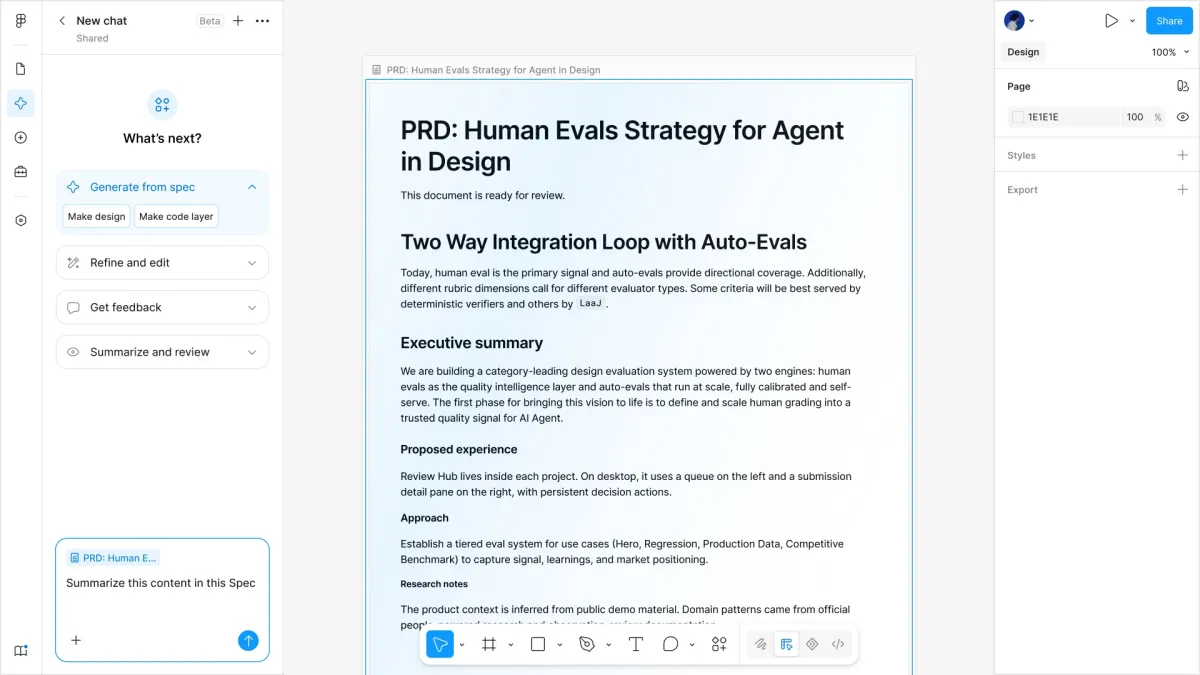
Figma unveiled a native Markdown editor called Figma Specs and expanded its Code Layers feature into public beta at its inaugural Config India conference, TechCrunch reported Thursday. The dual product release establishes operational boundaries for on-canvas artificial intelligence tools and third-party automated coding agents.
The dual product launch responds to a widening productivity paradox in enterprise software engineering. During the keynote presentation, Figma Chief Design Officer Loredana Crisan revealed that software development teams now generate seventeen times more lines of code with automated assistance than in prior cycles, yet actual production software releases have advanced by only thirty percent.
The 13x Disparity: Why Synthetic Code Functions as Design Rather Than Production
“We see Figma as the place where software teams come to decide what they build and ship. And so for that, I think one of the key things to keep in mind about what AI has changed and what it made available is the ability to build,” Figma’s chief design officer Loredana Crisan told TechCrunch. “There are 17-times more lines of code being produced today than in the past. But when you’re looking at releases, only 1.3-times more releases. A lot of that code actually is not necessarily built to ship, but really built to discover what the product is. It’s built to design.”
This thirteenfold structural gap between code creation and verified release demonstrates that raw token generation does not equate to shippable engineering value.
When large language models generate complete UI components in seconds, engineering organizations encounter severe verification bottlenecks rather than immediate velocity gains. DevOps Research and Assessment benchmarks and GitHub industry surveys confirm that pull request triage, security auditing, and regression testing now represent the primary constraints in modern software pipelines. The flood of ephemeral, unverified syntax turns synthetic code into an exploratory drafting medium rather than finished production software.
Figma Specs: Grounding Autonomous Agents in Markdown Design Systems
To prevent autonomous coding agents from drifting away from corporate brand guidelines and design systems, Figma introduced Figma Specs as a centralized context layer. Built as a native Markdown editor, the tool operates either as an independent project document or directly embedded inside the visual canvas alongside artboards and component libraries.
The system serves as a deterministic reference point for both native canvas agents and third-party LLMs querying project parameters. Teams can embed interactive FigJam diagrams, live component layers, and explicit code tokens within a single unified specification.
This contextual anchoring serves as a direct architectural response to earlier generative failures across the industry. During the Config 2024 conference, Figma temporarily disabled its Make Design generative feature after community researchers demonstrated that unconstrained models reproduced interface elements identical to Apple's native iOS Weather application. By formalizing corporate design systems into structured Markdown specifications, engineering teams can restrict generative models to declared tokens, preventing layout hallucinations before syntax enters the source repository.
Code Layers on Canvas: Executable Prototypes Challenge Static Mockups
Alongside structured documentation, Figma transitioned its Code Layers capability from a private test announced in June 2026 into public beta at the India gathering.
The feature allows designers and developers to embed live, executing frontend code directly onto canvas surfaces, transforming static vector mockups into functional prototypes that execute actual React and TypeScript logic. Users can instruct on-canvas agents to convert visual layouts into running components or adjust specific parameters through natural language prompts.
This live runtime environment pairs directly with Figma's integration of Payload CMS, the open-source headless architecture acquired by the company last year. By linking Payload with the Figma Make environment, product teams can generate dynamic, data-driven web properties directly from the workspace. Independent repository tracking indicates that Payload downloads expanded sixfold over the past twelve months, reflecting sustained developer interest in combining headless content architectures with visual component builders.
Model Context Protocol Integration: Bridging Design Systems and External Toolchains
Interoperability across external development tools represents the third pillar of the release. Figma expanded its official Model Context Protocol server to support more than twenty third-party platforms, establishing standardized bidirectional connections with developer environments including Open Code, Dia, Grok Bot, and Indian artificial intelligence startup Sarvam.
The integration leverages the open standard introduced by Anthropic in November 2024, replacing fragile scraping scripts with structured protocol handshakes. External coding agents running in environments like Claude Code or Cursor can now inspect design variables, read Figma Specs, and synchronize code changes directly back to the canvas.
The choice of Config India as the announcement venue reflects critical shifts in global developer distribution. India now constitutes Figma's largest active user base outside the United States, supporting enterprise deployments across forty percent of the top one hundred corporations listed on the Bombay Stock Exchange. By pairing open protocol connectivity with regional developer engagement, the platform operates as the primary orchestration layer where design guidelines constrain autonomous coding agents before production deployment.
Operational Deployment: Enterprise Adoption and the Bottleneck of PR Verification
Figma has not disclosed public token pricing tiers or consumption limits for live Code Layers outside the active beta window. The operational durability of on-canvas execution will depend heavily on runtime latency when prototypes execute external network calls or manage complex application state.
Development organizations face the immediate task of auditing how autonomous agents consume Markdown specifications without introducing manual documentation overhead for engineering teams.
Was this article helpful?
Your feedback helps our editorial team refine reporting depth and accuracy.
Related Articles
Sep 1, 2026
American Express: Intent Intelligence Framework Decouples AI Agent Actions From Raw Payment Credentials
American Express introduces the Intent Intelligence Framework, using Proof of Intent Tokens to secure AI agent transactions and prevent unauthorized purchases.

Aug 30, 2026
Cerebras: Andrew Feldman Outlines Hybrid Edge Architecture as Data Center Capacity Reaches Physical Limits
Cerebras CEO Andrew Feldman reveals that physical data center capacity shortages forced OpenAI to deploy Nvidia GPUs, while predicting hybrid home AI appliances with local security perimeters.

Aug 23, 2026
Meta Muse Wonder: The Architecture and Economics of Closed Frontier AI
Meta debuts Muse Wonder and Wonder Full, pairing a 1M token context window with persistent Active Memory while shifting its frontier tier behind proprietary API and subscription paywalls.