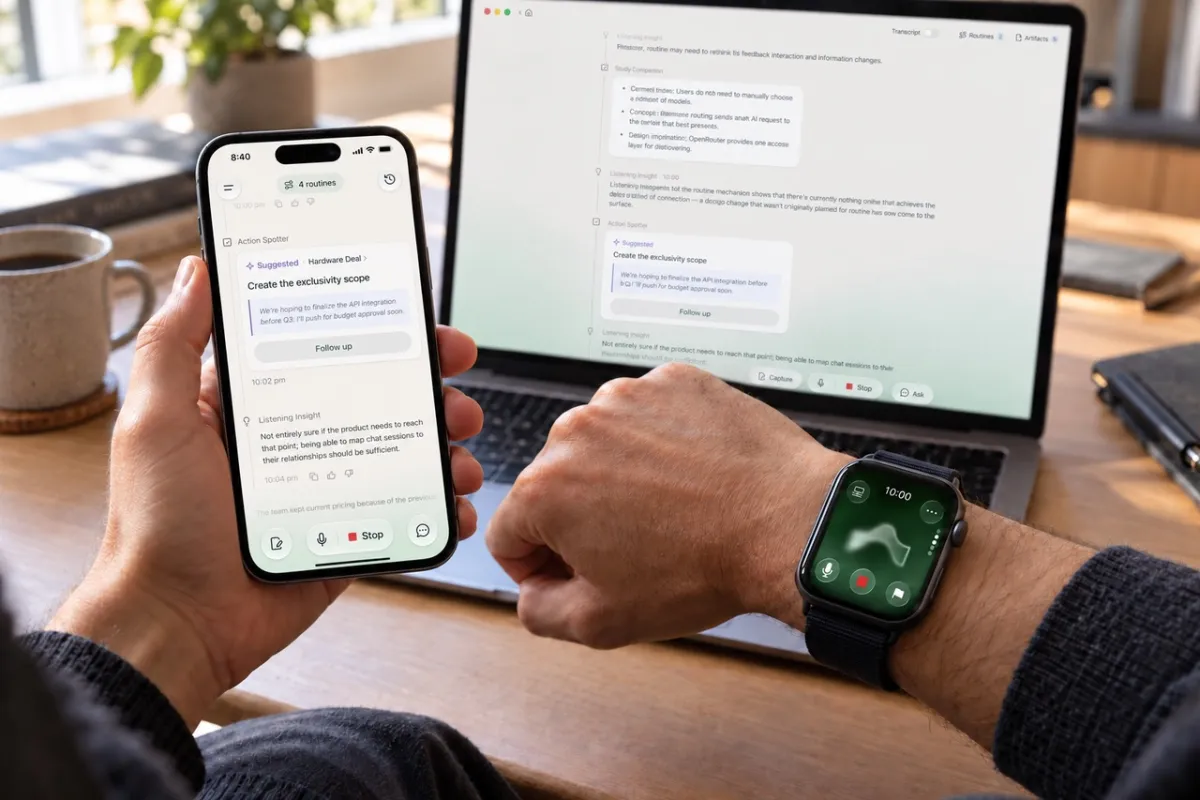
Google Play: Private Vibe-Coded Apps Redefine Android Distribution Architecture
By opening a private execution conduit for Google AI Studio creations on Android, Google dismantles the developer console onboarding barrier while anchoring natural language software within its native platform sandbox.
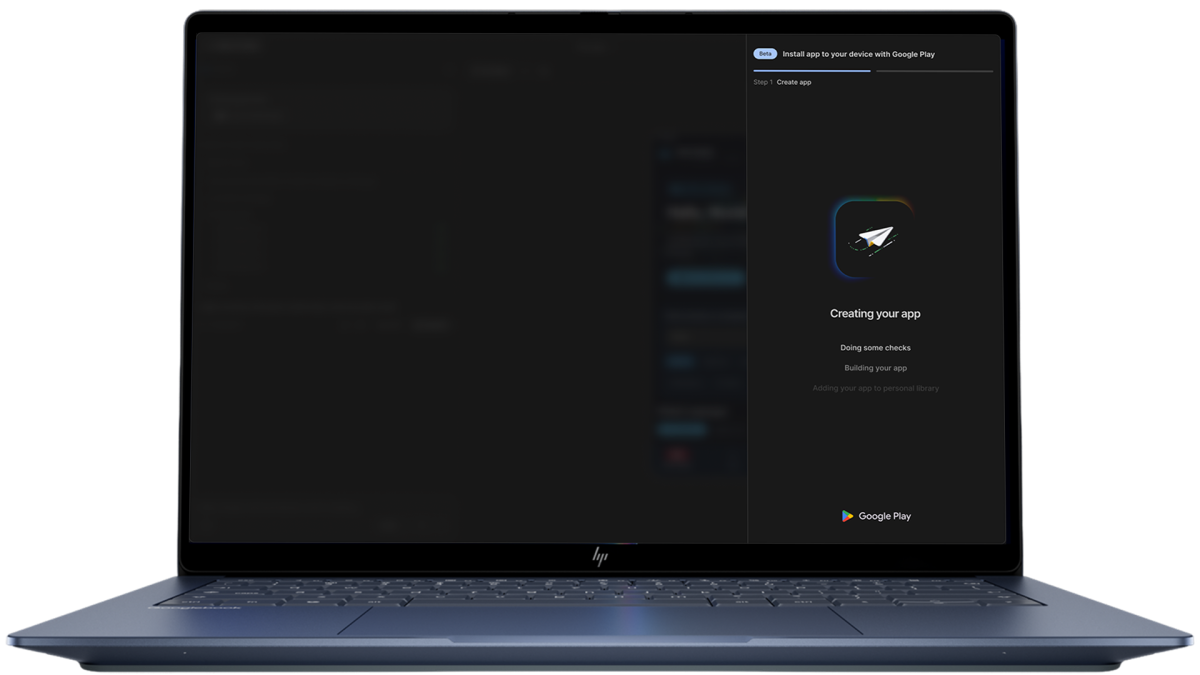
Google announced Tuesday that users can now run private, AI-generated applications directly on Android hardware without public store publication, TechCrunch reported. The new pipeline allows individuals to compile and deploy software created through Google AI Studio directly to their smartphones using standard consumer Google accounts. These applications remain isolated from the broader Play Store catalog, avoiding public indexing, search discovery, and storefront pages entirely.
The strategic shift directly addresses the mechanical friction that previously cordoned generative code experiments to desktop browsers and web runtimes. Rather than requiring developers to expose unvetted personal utilities to the Play Store's three billion global users, the operating system now provisions an unlisted local execution lane.
“That’s why the future of apps on Google Play is personal, secure, and built by everyone — and it’s why Play is leading the charge and moving from ‘there’s an app for that’ to ‘there’s an app for me,’” said Sam Bright, Google's Vice President and General Manager for Google Play and Developer Ecosystem, during an official press briefing. “We started Google Play with a simple goal: to connect you with the apps you love. But after today, we hope it’s clear: Play has evolved to become so much more than that.”
The Bypassed Gatekeeper: Dismantling the Console Onboarding Tax
Historically, launching native code on an Android device without navigating intimidating operating system warnings required an official Google Play Console registration. That pipeline demanded a one-time $25 fee, mandatory government-issued identification checks, and, under rules enacted in late 2023, a mandatory testing phase requiring twenty independent testers across a fourteen-day window for new personal accounts. While traditional sideloading existed via manual APK downloads, Google Play Protect warnings and recent restrictions on accessibility APIs turned local package installations into a technical obstacle course for non-specialists.
This structural friction forced early natural language programmers to abandon native Android builds. Instead, creators building software via prompt-driven environments leaned heavily on browser-based Progressive Web Apps (PWAs). Web wrappers avoided platform gatekeeping, but they sacrificed hardware-accelerated device integration, background threading, and responsive touch latency.
By routing Google AI Studio builds directly through the user's authenticated Google profile, Google effectively bypasses its own administrative checkpoint. The operating system handles package verification behind the scenes, eliminating APK signing keys, testing mandates, and developer fees for personal use cases. The result is a zero-cost local runtime deployment mechanism for prompt-generated software.
Architectural Containment: How the Android Sandbox Manages Synthetic Code
Eliminating the commercial gatekeeper does not grant synthetic code an unchecked bypass around operating system defenses. The core architecture of Android relies on the Application Sandbox, where the Linux kernel assigns a unique Linux User ID (UID) to each installed package. This isolation boundary ensures that memory spaces, internal storage directories, and system processes remain segmented, preventing one application from directly inspecting or modifying another.
Unchecked synthetic code introduces novel attack surfaces that traditional linters rarely detect. Large language models frequently hallucinate API calls, bundle outdated dependencies, or misconfigure network security policies. Google explicitly mandated that these personal creations must comply with Google Play's baseline operating policies, subjecting unlisted builds to automated Play Protect behavioral scanning to intercept malicious permission requests or background data leakage.
Sensor governance represents the primary friction point in this sandboxed environment. If an AI-generated utility requests access to device microphones, camera hardware, or background geolocation, Android enforces standard runtime permission prompts. The containment perimeter operates at the hardware boundary: even if a generative model outputs poorly structured logic, the operating system limits the application's blast radius to its designated UID container.
The Threat of Web Escape: Why Google Brought Natural Language Code In-House
Google's architectural pivot is fundamentally defensive. Over the past eighteen months, coding agents such as Cursor, Claude Code, and standalone LLM interfaces democratized software synthesis, yet almost all consumer output gravitated toward the open web. Had Google maintained its legacy Play Console restrictions, Android risked becoming an inert display panel for cloud-hosted web applications, eroding the platform's native application moat.
The competitive contrast with Apple's iOS ecosystem underlines this positioning. On iOS, deploying personal software to a physical device without paying Apple's $99 annual developer subscription requires free Xcode provisioning profiles that expire every seven days. Outside the European Union's regulatory interventions via the Digital Markets Act, sideloading on Apple hardware remains effectively locked down for mainstream users.
By establishing an end-to-end bridge between Google AI Studio and native Android hardware, Google ensures that the natural language development lifecycle remains tethered to its proprietary services. The company captures the developer tooling layer, the underlying Gemini foundation models, and the local execution runtime in a unified operational feedback loop.
The Path to Public Repositories: Graduating From Private Runtimes to Verified Storefronts
The current release represents the initial phase of a broader multi-tier distribution pipeline. Google confirmed that the capability is currently restricted to adult users aged 18 and older within the United States. Over the coming months, the company plans to introduce closed-circuit sharing, enabling users to distribute vibe-coded applications to trusted networks of family and friends without triggering public storefront listings.
For applications that gain traction within these private circles, Google outlined a graduation pathway to the public Play Store catalog. Transitioning from an unlisted personal build to a public repository requires completing formal Trust and Safety reviews, bringing the software under standard developer ecosystem compliance. What remains unconfirmed is how Google plans to handle sustained inference billing for apps that make continuous Gemini API calls, the exact quotas allocated to personal builds, and the specific calendar for international availability. Until those platform economics are formalized, Android's personal software revolution remains an active engineering deployment rather than a fully settled commercial framework.
Was this article helpful?
Your feedback helps our editorial team refine reporting depth and accuracy.
Related Articles
Aug 24, 2026
WindBorne Systems: The Autonomous Balloon Architecture Reshaping Military AI Meteorology
The U.S. Air Force commits up to $49 million to WindBorne Systems, validating autonomous balloon constellations to overcome the empirical data bottleneck in deep learning weather models.

Aug 23, 2026
Meta Muse Wonder: The Architecture and Economics of Closed Frontier AI
Meta debuts Muse Wonder and Wonder Full, pairing a 1M token context window with persistent Active Memory while shifting its frontier tier behind proprietary API and subscription paywalls.

Aug 21, 2026
Ambi: The $26M Ambient AI Bet to Eliminate Voice Hardware Latency
Mistlabs secures $26 million to bypass the upload bottlenecks of dedicated recording hardware, deploying background listening apps across Apple devices while offloading third-party consent risks to end users.