Canva: Craft Decouples Spatial Planning From Pixel Diffusion to Curb Escalating Inference Costs
Canva Craft introduces a two-stage spatial pipeline and distilled model variants to counter third-party API dependencies and rising inference expenses.
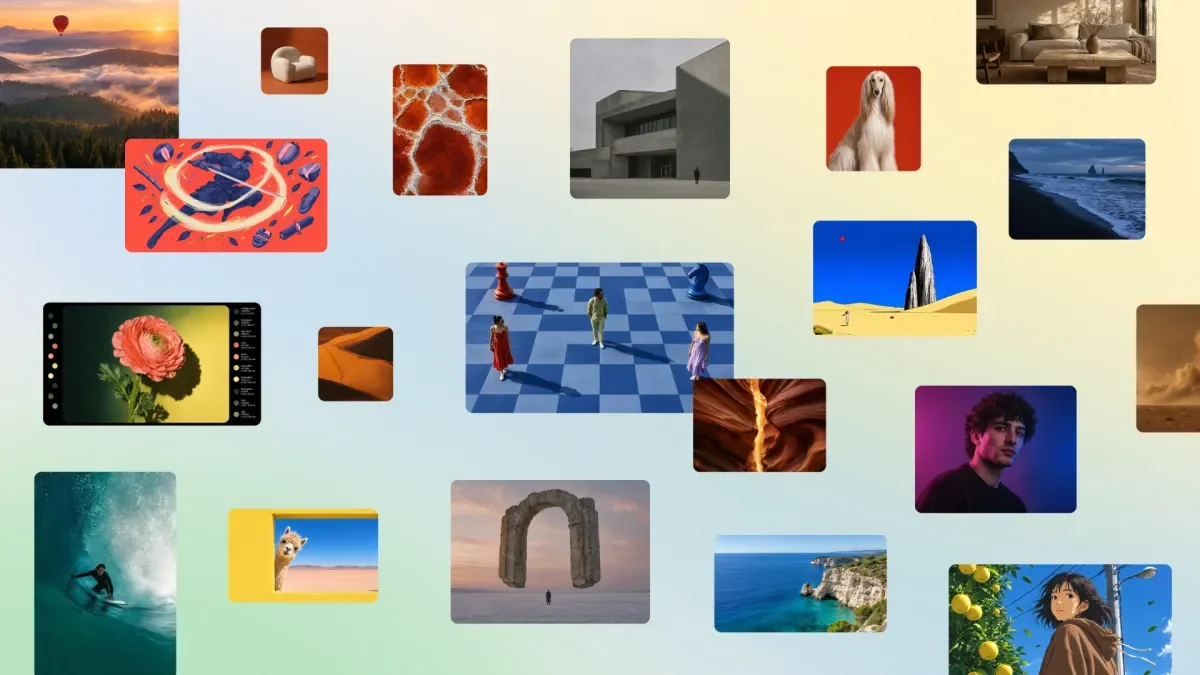
Design platform Canva officially released its first in-house image foundation model, Canva Craft, on October 22, 2026. The deployment marks an architectural transition from an aggregator of third-party machine learning APIs into a self-hosted infrastructure operator defending its operational margins.
Developed by Canva Research alongside research scientists absorbed from the July 2024 acquisition of Leonardo.ai, the system addresses a systemic flaw in commercial visual synthesis. Monolithic text-to-image diffusion models consistently struggle with complex multi-element composition, spatial coherence, and legible typographic rendering. Craft counteracts these failure modes by decoupling high-level semantic scene planning from raw pixel diffusion synthesis.
The Two-Stage Pipeline: Separating Spatial Layout From Diffusion Synthesis
Canva engineered Craft around an explicit two-stage pipeline that abandons the unconstrained single-pass generation used by legacy diffusion frameworks.
In the first stage, a dedicated prompt interpretation module processes user instructions into a structured spatial blueprint. This intermediate schema explicitly defines coordinate bounding boxes, element hierarchies, relative scales, and exact text strings before any diffusion sampling begins. During the second stage, the diffusion engine synthesizes the visual content within those predefined spatial bounds, rendering assets at up to 2K resolution across 30 distinct aspect ratios. Confining diffusion noise sampling to predetermined geometric regions prevents character bleeding and maintains strict typographic legibility.
This architectural decoupling resolves the primary editing bottleneck inherent to single-pass generative models. In standard diffusion networks, altering a single caption or relocating an icon requires regenerating the entire image tensor, discarding previous composition details. Because Craft isolates layout coordinate mapping from rasterization, users can modify specific design elements or alter text strings without forcing an expensive full-canvas diffusion recomputation. The system retains the underlying vector bounding coordinates, allowing iterative localized refinements that preserve the surrounding visual hierarchy.
Template-Conditioned Training and the Leonardo.ai Integration
Canva Research intentionally diverged from standard industry practice by avoiding uncurated web scrapes of photographs for its foundational training data. The team instead trained Craft from scratch using millions of human-designed templates drawn directly from Canva's commercial content catalog.
This proprietary training set spans professionally engineered posters, social media banners, corporate slide decks, vector infographics, restaurant menus, and typography-dense print layouts. Training on curated design artifacts grounds the network's latent space in graphic design fundamentals, visual balance, and clean typographic grids rather than unstructured photographic background noise, inherently favoring alignment and contrast across multi-layered assets.
Machine learning researchers integrated from Leonardo.ai utilized these structured templates to couple Craft directly with Canva Magic, the platform's proprietary image-to-design transformer. Instead of outputting a flattened, uneditable pixel grid, the pipeline translates generated assets into editable multi-layer document trees complete with distinct vector shapes, isolated graphic elements, and formatted text boxes. Canva confirmed in its technical release that this workflow bridges generative synthesis with downstream graphic production, allowing immediate layer-by-layer adjustments.
DesignArena Benchmarks and the High Stakes of Frontier API Economics
Craft entered public evaluation by debuting as the fourth most advanced image generation model on the DesignArena benchmark leaderboard on October 22, 2026. The model ranked immediately behind three proprietary OpenAI systems: GPT-Image-2.5 Sunburst, GPT-Image-2.5 Flare, and GPT Image 2, demonstrating top-tier text rendering and visual layout accuracy among commercial foundation models.
The primary motivation behind developing Craft remains anchored in unit economics rather than public leaderboard positioning. Canva approached $4 billion in annualized revenue over the past twelve months, but expanding user adoption of generative tools caused third-party compute expenses to surge. That cost overhead forced leadership to trim revenue growth forecasts for 2026, prompting private market analysts to reduce the company's valuation from $42 billion to $35 billion. Routing millions of daily design queries through external frontier APIs charging several cents per high-resolution call places unsustainable downward pressure on software subscription margins.
Operating proprietary model weights on dedicated inference clusters allows Canva to optimize hardware utilization and eliminate third-party API markups. Internalizing inference is a structural necessity for enterprise software platforms seeking to insulate gross margins from compute pricing volatility. Controlling the complete execution stack also allows engineers to tune inference kernels specifically for low-precision quantization and faster response times.
Agentic Interoperability Through the Canva MCP Server
Canva is also extending Craft beyond traditional browser-based graphical user interfaces by exposing direct developer endpoints.
Beyond direct integration within the Canva Developer API, the platform announced forthcoming support for the Model Context Protocol (MCP). This standard will enable external agentic runtimes operating across ChatGPT and Gemini to query Canva's MCP server directly, generating branded visual assets programmatically. Decoupling image synthesis from manual mouse-driven canvas interfaces allows automated enterprise software agents to generate on-brand marketing collateral at machine speed.
Production Rollout and the Distillation Path to Low-Cost Inference
Canva initiated the rollout of Craft on October 22, 2026, granting immediate access to paid subscribers through the Dream Lab interface tab. The research division is concurrently finalizing two optimized, low-latency variants designated Craft-fast and Craft-ultrafast, engineered specifically to serve high-volume production requests at a fraction of frontier compute costs.
Infrastructure teams plan to deploy these distilled models across high-throughput production clusters over the coming quarters. Transitioning recurring consumer workloads onto compact, specialized model weights provides Canva predictable compute expenses as autonomous multi-agent workflows reshape digital content creation.
Was this article helpful?
Your feedback helps our editorial team refine reporting depth and accuracy.
Related Articles
Oct 19, 2026
Uber: Deploying ChatGPT Work to 30,000 Staff Exposes Enterprise Inference Realities
Uber deploys OpenAI's ChatGPT Work across its 30,000 global corporate workforce, leaning on GPT-6.1 Sol and internal engineering pods while keeping inference costs and governance guardrails strictly confidential.
Oct 18, 2026
Google Antigravity: Claude Opus 5.5 Integrates Across IDEs as Legacy Models Face November Retirement
Google Cloud integrates Anthropic frontier reasoning into Antigravity IDEs, introducing pay-as-you-go overages while legacy models face a November 2 retirement deadline.

Oct 16, 2026
Gemini to Google Sites: The Engineering Architecture Behind One-Click App Publishing
Google officially connects Gemini interactive applications directly to Google Sites drafts in a single click, shifting generative UI from isolated chat sandboxes to enterprise intranets governed by Google Drive ACLs.