YouTube Music: Generative AI Labels and Metadata Standards Challenge Streaming Platforms' Flood of Synthetic Audio
YouTube Music rolls out new player labels and metadata standards for generative AI songs, diverging from rivals by preserving monetization amid an influx of synthetic audio.
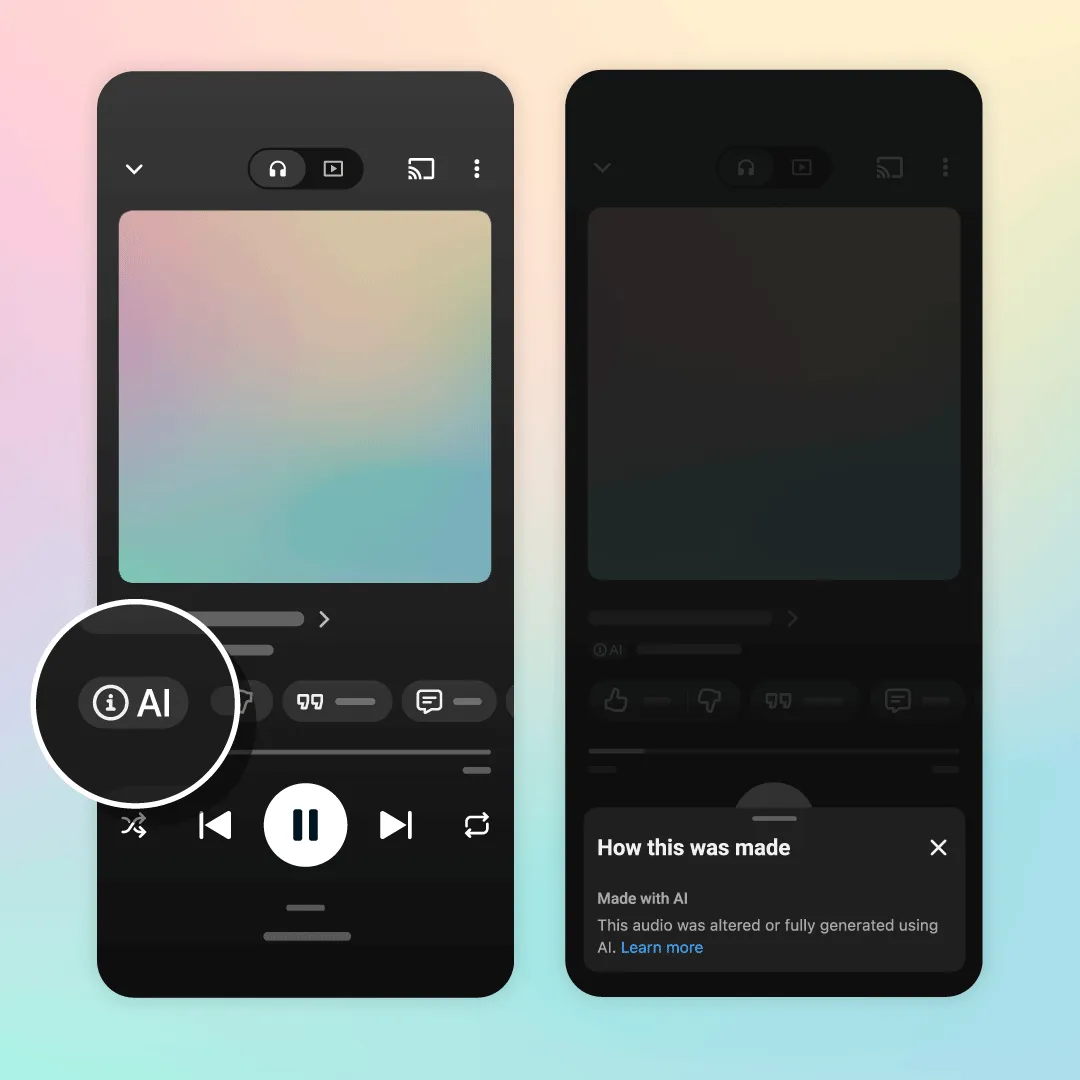
YouTube Music initiated the rollout of a comprehensive disclosure and labeling system for tracks created with generative artificial intelligence, TechCrunch reported Wednesday. The system embeds explicit visual badges directly onto the player interface across both YouTube Music and the primary YouTube video application, establishing clickable metadata sheets that detail whether algorithmic models generated the vocal performance, harmonic composition, or underlying audio stems.
The engineering deployment arrives at a moment of acute operational strain across digital streaming infrastructures. Unlike competing distributors attempting to suppress synthetic audio through blanket bans or automatic demonetization, Google's audio platform is establishing an ingestion framework that codifies generative media into standard digital distribution pipes. This architecture deliberately keeps commercial monetization channels open for flagged uploads.
The Three-Tier Metadata Architecture: Dissecting YouTube’s Disclosure Standards
The operational core of YouTube's system relies on a tripartite classification delivered through standardized ingestion pipelines, including Digital Data Exchange (DDEX) feeds and comma-separated catalog templates. According to official partner documentation published by Google, rights holders and distributors must designate incoming audio assets into one of three distinct categories: Fully Gen AI, Partly Gen AI, or No Gen AI. The first tier encompasses recordings where foundational models synthesized the entire composition, instrumentation, and vocal track from scratch. The second captures hybrid workflows, where human performers blend live instrumental tracking or authentic studio takes with machine-generated stems.
Crucially, the technical specifications draw a firm perimeter around conventional digital signal processing. The guidelines explicitly mandate that pitch-correction software, including Auto-Tune and Melodyne, as well as analog saturation and dynamic equalization, fall strictly under the "No Gen AI" designation to prevent catalog distortion.
To enforce compliance beyond self-reported distributor tags, YouTube deployed proprietary acoustic detection models that scan ingested waveform spectrograms. When an asset is flagged or verified, listeners tapping the on-screen badge access a dedicated disclosure card. Rather than burying provenance details in obscure copyright registries, the architecture surfaces model involvement directly in the playback interface. This mechanism shifts the burden of qualitative evaluation directly to the consumer.
The 90,000-Track Daily Surge: Why Deezer and Rivals Chose Exclusion Over Disclosure
YouTube’s disclosure-centric strategy contrasts sharply with the defensive posture adopted by European and specialized streaming providers grappling with automated upload surges. Streaming service Deezer announced on Tuesday that it is developing an account-level toggle scheduled for release before the end of the year, enabling subscribers to completely expunge AI-generated tracks, albums, and synthetic artist profiles from search results and algorithmic queries.
The operational catalyst behind Deezer’s filter stems from measured catalog volume: in July, the platform confirmed that fully artificial tracks accounted for more than 50% of its daily catalog additions, averaging 90,000 synthetic uploads every 24 hours. That influx translates to roughly 2.7 million automated tracks entering a single platform's distribution servers every month. According to joint research conducted by Deezer and survey firm Ipsos, 45% of surveyed listeners explicitly demanded the ability to strip synthetic songs from their recommendation feeds.
| Streaming Platform | Labeling Mechanism | Algorithmic Catalog Policy | Monetization Status | User Exclusion Filters |
|---|---|---|---|---|
| YouTube Music | 3 Player Badges (Fully, Partly, No Gen AI) | Native inclusion in search and player feeds | Preserved (Ad and subscription revenue intact) | No search removal toggle |
| Deezer | Automated detection tags (deployed since 2025) | Excluded from editorial playlists and recommendations | Royalties withheld on detected artificial streams | Account toggle launching by late 2026 |
| TIDAL | Identifiers for pure synthetic audio | Stripped from human-curated discovery hubs | Full demonetization of purely artificial tracks | User disablement controls supported |
| Bandcamp | Policy ban enforced on storefront | Delisted from platform database | Outright prohibition of synthetic uploads | Storefront-wide exclusion |
| Apple Music | "Made With AI" tags (AI Transparency Tags) | Standard catalog indexing | Governed by existing label licensing pacts | Scheduled for late 2026 deployment |
"We’ve seen clear user demand for the ability to filter out AI-generated music, and we are now giving everyone the option to remove this content completely from their streaming experience on Deezer, and focus only on human creators and creations, if they wish," Deezer Chief Executive Officer Alexis Lanternier stated regarding the filter's rollout. This platform fragmentation reflects a deep structural split in digital music economics, where Bandcamp enacted an outright ban on synthetic recordings and TIDAL severed royalty payouts for tracks identified as wholly generated by machine models.
Preservation of Monetization: Strategic Trade-Offs in YouTube’s Generative Ecosystem
The defining engineering and commercial decision in YouTube's rollout is the explicit preservation of creator monetization. While competitors treat synthetic audio as an economic hazard that dilutes shared royalty pools, YouTube confirmed that an asset bearing a "Fully Gen AI" or "Partly Gen AI" label remains eligible for advertising splits and subscription revenue allocations. This posture aligns directly with Alphabet’s broader investments in proprietary audio generation models, most notably its Dream Track initiative. Dream Track licenses authorized vocal likenesses from participating artists to allow creators to synthesize custom musical accompaniments.
By decoupling algorithmic labeling from demonetization, YouTube avoids disincentivizing disclosure. If platform policies penalize AI usage with immediate royalty revocation, distribution aggregators and offshore catalog factories have zero incentive to populate DDEX transparency fields accurately, forcing detection classifiers into an adversarial cat-and-mouse dynamic.
Permitting monetized distribution under transparent metadata tags creates an operational path where synthetic tracks remain discoverable, indexable, and taxable within Google's content infrastructure. However, the architecture introduces significant long-term strain on recommendation mechanics. By incorporating machine-generated tracks into its primary recommendation graph, YouTube bets that user engagement metrics, rather than production origins, will determine catalog longevity.
Industry Consensus and Operational Milestones for Algorithmic Catalogs
Music industry standards bodies and major streaming operators are converging on formal verification deadlines across the final quarter of 2026. Deezer plans to complete the public deployment of its search exclusion toggle by late December, establishing the first widespread production benchmark for subscriber-directed catalog filtering while Apple Music finalizes integration testing for its "Made With AI" Transparency Tags.
Digital Data Exchange working groups are drafting expanded XML schemas to standardize how generative AI contributions, models, and creator transparency disclosures are referenced in master recording records. As YouTube Music expands its player-level badges from mobile clients into desktop web interfaces and television applications, the streaming sector's foundational architecture is pivoting from retrospective copyright enforcement to real-time algorithmic classification. The coming operational challenge centers on whether metadata protocols can maintain taxonomy integrity as generation costs drop toward zero.
Was this article helpful?
Your feedback helps our editorial team refine reporting depth and accuracy.
Related Articles
Aug 30, 2026
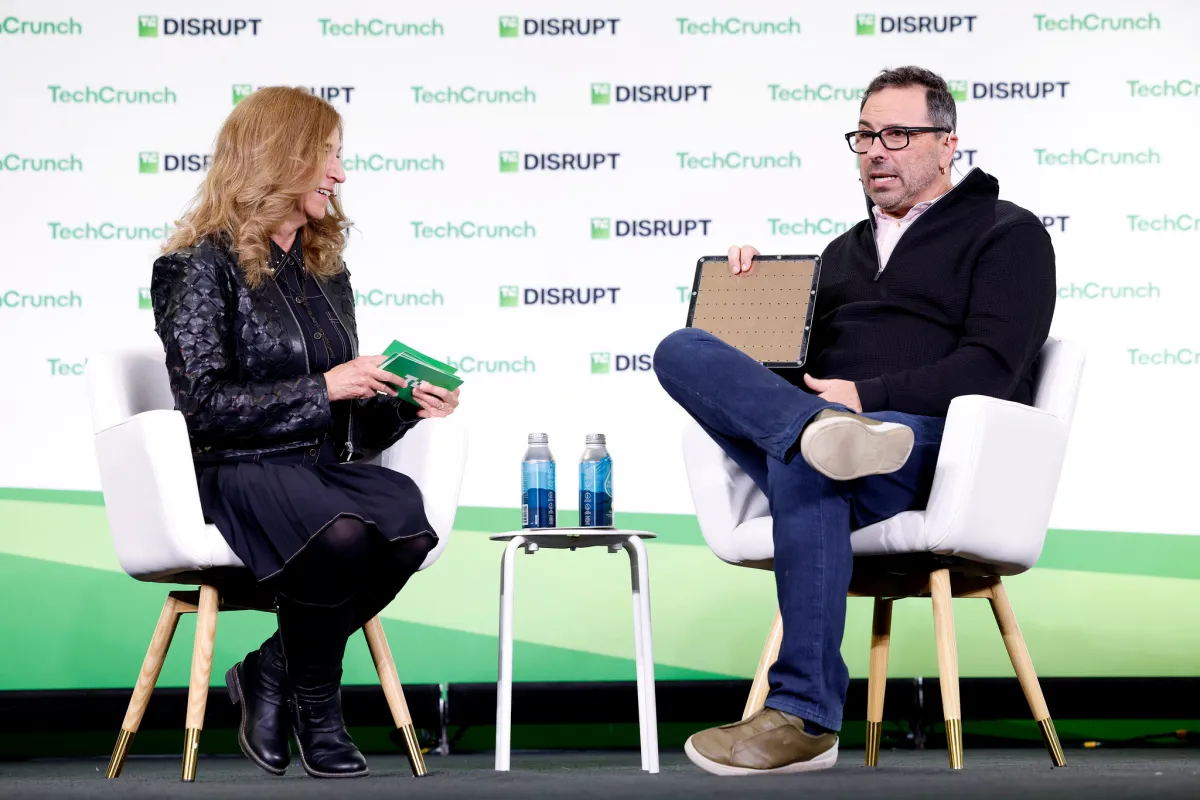
Cerebras: Andrew Feldman Outlines Hybrid Edge Architecture as Data Center Capacity Reaches Physical Limits
Cerebras CEO Andrew Feldman reveals that physical data center capacity shortages forced OpenAI to deploy Nvidia GPUs, while predicting hybrid home AI appliances with local security perimeters.
Aug 27, 2026
OpenAI vs. Apple: Federal Judge Orders Discovery of AI Hardware Hiring Records
A federal judge ordered OpenAI to produce candidate evaluation records and private communications in Apple's trade secrets lawsuit, while blocking broad scrutiny into proprietary hardware research.

Aug 26, 2026
Google Play: Private Vibe-Coded Apps Redefine Android Distribution Architecture
By opening a private execution conduit for Google AI Studio creations on Android, Google dismantles the developer console onboarding barrier while anchoring natural language software within its native platform sandbox.