Voice AI: Full-Duplex Models Cannot Mask Reasoning Latency and ASR Fragility
Enterprise voice platforms are decoupling acoustic speech from cascaded models, but technical leaders at HumanX warn that ASR keyword dropouts and reasoning latency prevent a true ChatGPT moment.
Venture capital funds poured billions of dollars into conversational voice startups over the past eighteen months, yet technical leaders operating on the ground warn that the category remains far from its transformative inflection point. While full-duplex speech models can now stream synthetic voices without robotic pauses, enterprise adoption continues to stall against severe system bottlenecks, TechCrunch reported Sunday.
The friction is architectural rather than acoustic: despite promotional demonstrations showcasing fluid banter, enterprise pipelines cannot rely on current models to conduct reliable multi-turn workflows when speech recognition errors and inference delays disrupt critical operational chains.
The Full-Duplex Illusion: Acoustic Streaming Versus Real-Time Reasoning
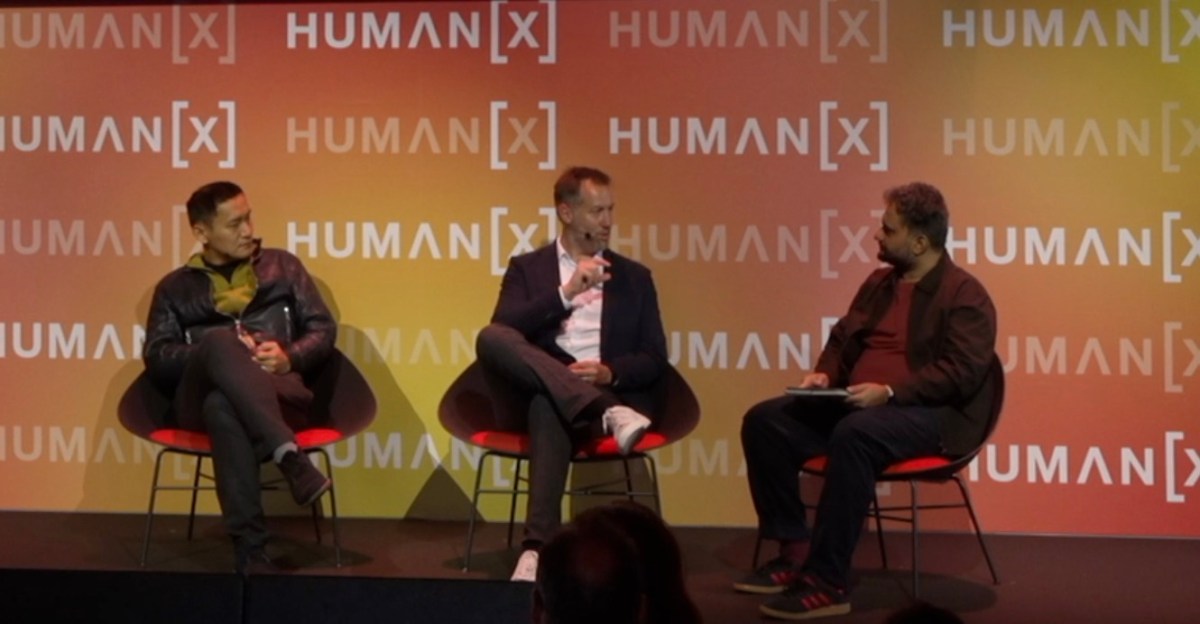
At the HumanX conference, industry executives challenged the prevailing commercial narrative that human-sounding voice synthesis equates to operational competence. Shawn Wen, co-founder and Chief Technology Officer of enterprise voice platform PolyAI, stated directly that the emergence of full-duplex architectures has solved conversational cadence without resolving the underlying computational delay. Full-duplex systems process inbound audio while simultaneously generating outbound speech, eliminating the awkward turn-taking pauses that plagued legacy call centers.
"We have reached the milestone of developing full-duplex models. The next challenge is to make reasoning very fast, so that the models can fetch answers quickly and the conversation feels natural," Wen told conference attendees. Masking latency with conversational fillers like "uh-huh" or synthetic breathing cannot compensate for slow database lookups or multi-hop retrieval.
In production environments, conversational dynamics enforce strict physical bounds. Human dialogue typically operates with a response latency of roughly two hundred milliseconds. Native speech-to-speech models can reach roundtrip audio delivery within 250 to 350 milliseconds when generating simple phatic acknowledgments. However, once an agent must execute retrieval-augmented generation (RAG) across enterprise databases, verify an account balance, or calculate shipping logistics, execution latency surges well past one thousand milliseconds, shattering conversational realism.
The Context Breakdown: How Minor ASR Errors Corrupt Downstream Workflows
Beyond inference speed, the fragility of the context layer represents an even steeper operational hurdle. When automatic speech recognition (ASR) engines drop critical tokens in enterprise architectures, the entire downstream workflow fails.
Wen emphasized that current ASR models frequently miss domain-specific keywords, names, and numerical identifiers. This failure cascades directly into the prompt injection and reasoning pipeline. If an ASR model mishears a single alphanumeric SKU or customer confirmation code, the downstream large language model attempts to resolve a query on corrupted inputs, producing hallucinatory actions rather than reliable customer service.
Alex Gay, Chief Marketing Officer at meeting intelligence platform Otter.ai, corroborated the systemic risk of upstream transcription failure. "For Otter, you know, transcription was never the end point. It was just the layer that we could start to drive some of the productivity gains on the back of," Gay explained during the conference. "But if your original transcription didn't have the accuracy that you needed, all the follow-up actions that you have become flawed. And the minute that starts to take action, that is wrong. You lose trust in the platform. It is critical for us to continue to improve that ASR model because all of the downstream impacts are significant."
The Three-Turn Confidence Barrier and the Limits of Digital Twins
User retention in voice systems exhibits extreme sensitivity to early friction. Wen noted that callers decide whether an automated agent is competent within an exceptionally narrow window: the first two or three conversational turns. If the agent misinterprets user intent or hesitates during those opening thirty seconds, callers abandon the automated flow and demand human intervention.
"I think the next stage will be slightly different because once the voice is good enough, like, and the customer is willing to engage with them for the first two or three turns, they start to build confidence, and over time, they will feel like I probably don't have to talk to a human if the agent can solve my problem," Wen noted. Clearing those three initial turns requires flawless intent parsing, a hurdle that current stochastic models fail to clear consistently under background noise or heavy regional accents.
The barrier escalates when voice AI attempts to replicate collaborative workplace interactions through synthetic avatars or digital twins. Otter.ai is actively engineering digital twin systems intended to represent individuals in workplace meetings. Gay conceded that existing conversational layers lack the nuance required for high-stakes professional exchanges: "If you think about the meetings that you're in right now, the best conversations that you have are where you can have debate, and strategic discussions, and when you feel like there's a relationship that underpins it. If you aren't able to have that with an avatar, then it's just a q and a chatbot."
The Infrastructure Horizon: Confirmed Architectural Shifts and Unresolved Latency Constraints
The enterprise voice ecosystem is currently bifurcating into two distinct technical layers. At the surface, acoustic generation has decoupled from traditional cascaded pipelines, offering human-level intonation, emotional inflection, and duplex streaming alongside mandatory disclosures that inform call participants when automated systems are listening.
Yet the core infrastructure challenges remain unresolved on hardware and algorithmic levels. Achieving sub-second reasoning across enterprise knowledge graphs without truncating chain-of-thought processing remains an open engineering bottleneck. Until speech recognition achieves near-zero error rates on domain-specific terminology and inference clusters deliver real-time database queries within human conversational thresholds, voice AI will remain an impressive acoustic layer awaiting its foundational reasoning engine.
Was this article helpful?
Your feedback helps our editorial team refine reporting depth and accuracy.
Related Articles
Amazon: Ending Data Center NDAs Exposes the Physical Limits of AI Scaling
Amazon Web Services joins Microsoft in terminating municipal nondisclosure agreements amid nationwide moratoriums, exposing the power grid bottlenecks capping AI data center expansion.

Apple: Reverse Acqui-Hire of Huxe AI Signals Push Into Interactive Audio Infrastructure
A regulatory filing under the European Digital Markets Act reveals Apple's deal to license Huxe AI tech and hire core engineers behind NotebookLM audio synthesis.

Microsoft: Satya Nadella Proposes AI Emergency Brake Architecture
Microsoft CEO Satya Nadella calls for treating AI models as insider risks, demanding deterministic external harnesses, tamper-proof logs, and emergency brakes.