Amazon: Ending Data Center NDAs Exposes the Physical Limits of AI Scaling
Amazon Web Services joins Microsoft in terminating municipal nondisclosure agreements amid nationwide moratoriums, exposing the power grid bottlenecks capping AI data center expansion.
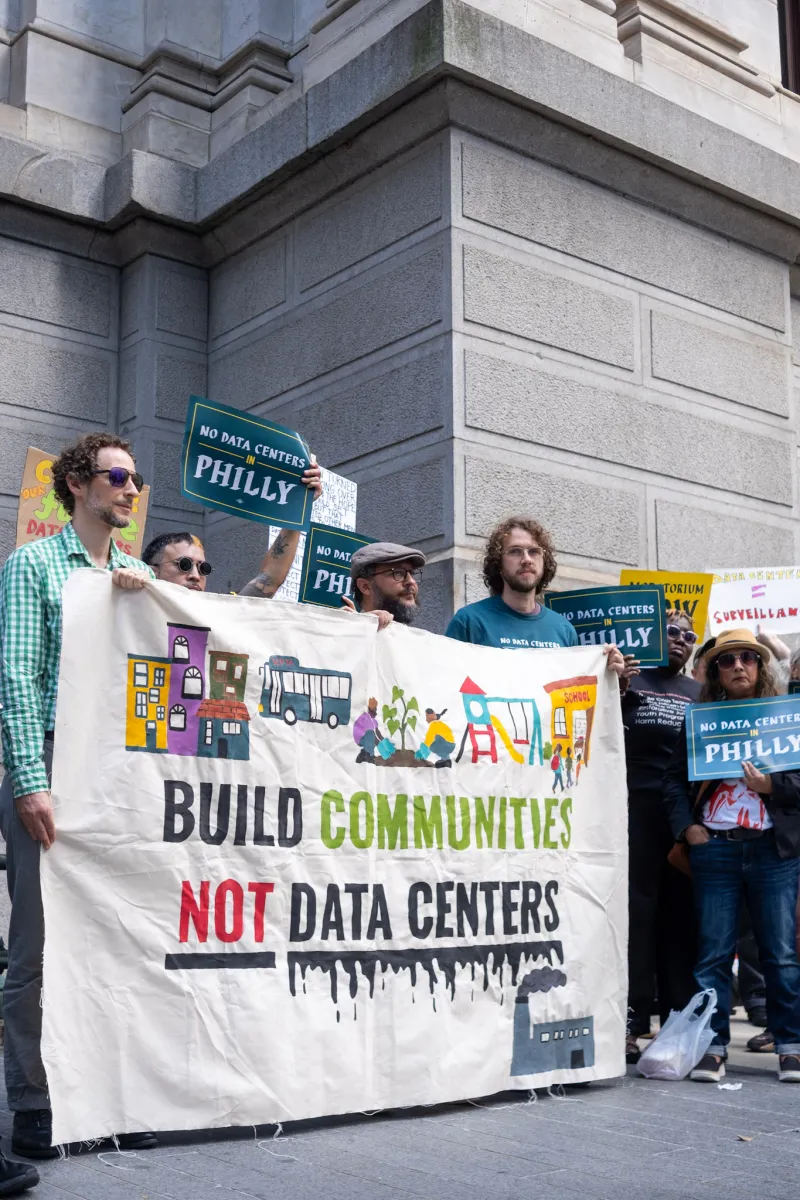
Amazon Web Services announced it will terminate the use of nondisclosure agreements with government agencies when negotiating data center developments, shifting corporate strategy after years of private municipal negotiations. The policy reversal arrived alongside a five-year, $1 billion community investment initiative named Built Together, designed to address mounting local resistance across the United States.
The concession highlights a growing friction point for hyperscale cloud operators. While frontier artificial intelligence laboratories demand unprecedented compute capacity to sustain multi-gigawatt training runs and real-time reasoning workloads, the physical installations required to host those clusters face direct political resistance from host municipalities. With more than 100 data center moratoriums under consideration or enacted nationwide, tech giants are discovering that access to high-voltage transmission lines and regional substations cannot be secured solely through sealed municipal covenants.
The shift by AWS mirrors a March 2026 announcement by Microsoft, which ended its own reliance on nondisclosure agreements with local public authorities. For more than a decade, tech conglomerates routinely deployed strict municipal confidentiality pacts to negotiate site selections, property tax abatements, and dedicated electrical capacity before public hearings took place.
The Municipal Bottleneck: When Secrecy Collides With Power Grids
The practice of negotiating critical civic infrastructure under nondisclosure covenants has deep roots across Silicon Valley. Tech companies historically relied on confidential negotiations to quietly secure utility concessions and municipal incentives before community opposition could organize.
Speaking on TechCrunch's Equity podcast, senior reporter Sean O'Kane noted that this operational playbook parallels the urban expansion strategies executed by transportation networks in the previous decade. When high-growth tech platforms negotiated municipal subsidies behind closed doors, executive teams grew accustomed to demanding sweeping civic concessions without public oversight. That legacy of corporate opacity now fuels community skepticism as hyperscalers pursue utility hookups requiring hundreds of megawatts.
Local authorities and residential ratepayers increasingly question the terms of these arrangements, particularly in jurisdictions where utilities allocate substantial base-load capacity to cooling systems and server racks. Homeowners face climbing electricity rates to subsidize grid modernization, prompting community coalitions in Virginia, Georgia, and the Pacific Northwest to demand independent audits of water consumption and power commitments before permits issue.
As TechCrunch weekend editor Anthony Ha observed during the broadcast, abandoning nondisclosure covenants will not automatically dismantle local resistance. Municipal skepticism stems from years of excluded public oversight. Opening project terms to municipal scrutiny represents an essential baseline for dialogue, yet transparency alone cannot generate surplus power on constrained regional grids.
Regulatory Scrutiny and the Shifting Economics of Transmission
The operational pivot by Amazon and Microsoft follows escalating legislative oversight in Washington. Federal lawmakers have opened investigations into how hyperscalers structure infrastructure agreements with regional utilities.
A yearlong congressional inquiry led by Senators Elizabeth Warren, Richard Blumenthal, and Chris Van Hollen has examined whether tech giants shift capital expenditure risks onto residential ratepayers. Lawmakers scrutinized how confidential pacts insulated public utility commissions from public accountability while hyperscalers secured favorable rate tariffs. Concurrently, Representative Jamie Raskin spearheaded inquiries examining municipal disclosure standards and water depletion metrics near major computing clusters.
State utility regulators are already establishing protective mechanisms to safeguard consumers. In North Carolina, regulatory settlements involving Duke Energy established frameworks requiring hyperscalers, including Microsoft and Meta, to pay upfront capital expenses for necessary transmission upgrades rather than folding grid expansion costs into broad ratepayer bases.
These legal and regulatory structures recalibrate the unit economics of AI campus construction. When hyperscalers must fully capitalize dedicated substations, dual-feed transmission lines, and water reclamation systems upfront, the effective cost per megawatt increases significantly. The era of municipal tax write-offs paired with quiet utility absorption is giving way to explicit capital requirements.
Infrastructure Lead Times and the Reality of Local Moratoriums
In announcing the Built Together framework on About Amazon, AWS chief executive Matt Garman framed data center expansion as a foundational national priority, comparing digital compute infrastructure to the federal interstate highway system built during the 1950s. Garman cautioned that spreading local bans threaten American competitiveness in artificial intelligence, arguing that local concerns over water depletion and utility costs stem from inaccurate claims.
Yet framing municipal pushback as mere communication friction obscures structural timing mismatches in engineering procurement, as highlighted by TechCrunch reporter Rebecca Bellan.
Most local moratoriums, such as the one-year pause on commercial permits enacted in New York to complete environmental reviews, impose temporary intervals lasting twelve to twenty-four months. In contrast, hyperscale computing facilities require between three and five years to move from site acquisition to full commercial energization. Delays stemming from municipal zoning hearings frequently overlap with supply chain bottlenecks for high-voltage transformers and utility interconnection reviews that already extend into the next decade.
By allocating $1 billion over five years toward community college technical training, public building insulation grants, and municipal emergency services, Amazon aims to build local goodwill. However, financial pledges cannot compress the lead times required by regional transmission operators like PJM Interconnection to study multi-hundred-megawatt load additions.
Grid Allocation Realities in the Next Phase of Frontier Compute
The decision by Amazon and Microsoft to abandon municipal nondisclosure agreements confirms that physical constraints now dictate artificial intelligence deployment strategies, ending the era where municipal grids were treated as frictionless inputs.
Voluntary transparency commitments provide host communities with timely visibility into proposed power draws, water recycling protocols, and site boundaries. These disclosures allow local planning boards to evaluate industrial developments based on verifiable engineering specifications rather than speculative corporate filings.
Significant engineering hurdles remain unresolved across the national grid, where regional transmission operators continue to grapple with multi-year interconnection queues and utilities face statutory mandates to insulate residential ratepayers. The retirement of confidentiality agreements formalizes the public debate over where, how, and at whose expense artificial intelligence infrastructure will physically connect to the electrical grid.
Was this article helpful?
Your feedback helps our editorial team refine reporting depth and accuracy.
Related Articles
Aug 18, 2026
Apple: Reverse Acqui-Hire of Huxe AI Signals Push Into Interactive Audio Infrastructure
A regulatory filing under the European Digital Markets Act reveals Apple's deal to license Huxe AI tech and hire core engineers behind NotebookLM audio synthesis.

Aug 16, 2026
Microsoft: Satya Nadella Proposes AI Emergency Brake Architecture
Microsoft CEO Satya Nadella calls for treating AI models as insider risks, demanding deterministic external harnesses, tamper-proof logs, and emergency brakes.
Aug 15, 2026
Arena: The $3.1B Valuation and the Monetization of AI Benchmarking
Arena secured $200 million at a $3.1 billion valuation, capitalizing on the breakdown of static evaluations as enterprise buyers demand real-world verification and behavioral alignment metrics.