European Supermarket Freezers Set to 50°C Reveal the Fragility of Unpatched OT Networks
A cyberattack across six European nations remotely forced supermarket freezers up to 50°C, exposing the security deficit of legacy OT refrigeration networks.
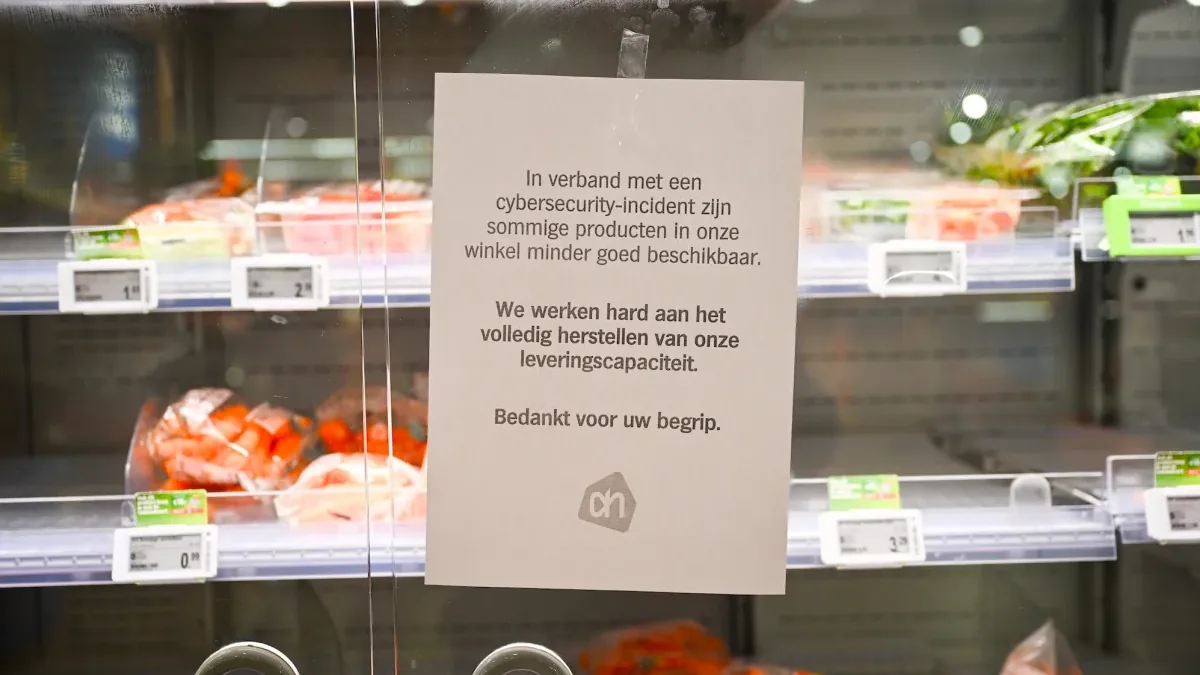
In the early hours of November 2, 2026, a coordinated wave of suspected cyberattacks penetrated internet-exposed refrigeration systems across European supermarkets, turning industrial chillers into heating units. Attackers manipulated digital control units to drive internal temperatures as high as 50°C, spoiling perishable inventory across Sweden, Belgium, Ireland, Luxembourg, Estonia, and the Netherlands.
Retail giants including Ahold Delhaize, Colruyt, ICA, Coop, and Selver confirmed overnight disruptions after facility monitoring systems detected unauthorized setpoint overrides. Unlike conventional enterprise ransomware operations, the intrusion extracted no customer databases, encrypted no administrative servers, and published no financial extortion demands. Instead, the attackers interfaced directly with legacy operational technology (OT) controllers governing industrial cooling and automated defrost cycles. The physical fallout forced grocery operators to pull ruined goods from store shelves and close affected aisles during Monday morning restocking hours.
According to early incident assessments reported by The Record, law enforcement agencies have not attributed the operation to any specific threat actor or nation-state sponsor.
In southern Sweden, supermarket manager Rickard Nilsson told broadcaster TV4 that heat began blowing directly into freezer cabinets, rendering store staff unable to override local controls. Technicians across Belgium mobilized at 1 a.m. after installation firm Sabcobel identified 20 affected refrigeration units across its retail customer base. While Selver communications chief Mariann Järvela told ERR News that fast response teams contained temperature spikes within ten minutes at an Estonian outlet, other regional operators faced total inventory losses.
Overnight Disruptions Strike Supermarket Cold Chains Across Six European Nations
The November incident represents the second widespread assault against European commercial refrigeration within three weeks. In mid-October 2026, French retail networks experienced identical disruptions when approximately 700 supermarkets saw cooling hardware forced into continuous defrost cycles, according to figures shared by the Paris prosecutor's office.
Major French chains including Intermarché, Carrefour, Monoprix, and Coopérative U reported superheated refrigeration rooms that ruined frozen supplies. France's national cybersecurity agency, ANSSI, noted that attackers targeted internet-exposed remote controllers manufactured across multiple commercial brands. The November campaign replicated this playbook across international borders, hitting more than 50 store locations in Belgium alongside scattered facilities in Ireland and the Netherlands. The geographical diffusion demonstrates that threat actors are systematically scanning and exploiting common operational protocols rather than targeting a single corporate enterprise.
Belgian retail operator Delhaize confirmed that attackers adjusted equipment configurations directly to defrost mode, crippling active chilling mechanisms.
Industry analysts and facility contractors observed that the timing coincided with low-traffic operational windows when on-site retail staffing remains minimal. This scheduling delayed immediate human detection, allowing ambient heating elements to thaw frozen goods past legal safety thresholds. Stores in Sjöbo and Stockholm were forced to dispose of dairy, meat, and frozen stock once temperatures breached regulatory safety limits.
How Remote Temperature Manipulation Replaced Traditional Data Extortion
Enterprise cybersecurity teams traditionally allocate monitoring resources toward securing active directory domains, financial processing networks, and point-of-sale terminals. This incident exposes the blind spot created when operational technology systems are connected directly to wide-area maintenance networks without rigorous segmentation.
Modern commercial refrigeration relies on networked controllers to manage compressor cycling, fan speeds, automated defrost schedules, and remote temperature diagnostics. Facility engineers frequently expose these devices to public IP addresses or cellular gateways to facilitate off-site telemetric monitoring by third-party maintenance contractors. When threat actors discover exposed administrative portals, they bypass traditional corporate firewalls entirely. They manipulate thermodynamic setpoints directly rather than dropping credential-stealing malware or lateral movement payloads.
Security researchers at Claroty warned in August that internet-connected industrial refrigeration controllers carried severe vulnerabilities enabling remote overrides and operational outages.
As detailed in reporting from TechCrunch, industrial devices from manufacturers like Danfoss and Copeland were identified among compromised endpoints. In Estonia, Kitman Coldtech director Jann Mutso confirmed that attackers accessed an older Danfoss controller to elevate freezer temperatures to 50 degrees above zero. By altering defrost intervals and alert triggers, the attackers delayed local alarm notifications before store supervisors arrived for morning shifts.
Commercial Refrigeration Telemetry and Operational Impact Across European Outlets
Field reports from affected member states reveal substantial divergence in technical impact depending on facility response times and network topology. The table below consolidates documented operational telemetry, equipment brands, and status indicators recorded across the affected regions.
| Jurisdiction and Retailers | Documented Equipment | Operational Impact and Status |
|---|---|---|
| Sweden (ICA and Coop) | Legacy Danfoss controllers | Setpoints raised to 50°C forcing heat into units; inventory discarded |
| Belgium (Delhaize and Colruyt) | Danfoss and Copeland units | Configuration forced into defrost mode; physical hardware remediation |
| France (October baseline) | Multi-brand controllers | Continuous defrost and delayed alarms; 700 facilities logged |
| Estonia (Selver chain) | Unupdated Danfoss terminal | Target raised to 50°C; 2°C to 3°C rise before 10-minute remediation |
| European Union (General) | Discontinued commercial OT | Direct web exposure without VPNs; Cyber Resilience Act pending 2027 |
The contrast between Estonia's rapid containment and Sweden's total inventory loss highlights the role of automated anomaly detection in physical environments. Selver had already modernized monitoring across its retail fleet, leaving only one remaining store on legacy hardware when the intrusion struck. When telemetry alerted engineers within minutes, technicians restored normal chilling parameters before perishable inventory suffered thermal degradation.
Why Commercial Refrigerators Operate Decades Past Software Maintenance Cycles
Industrial refrigeration hardware carries capital lifespans extending between fifteen and twenty-five years, creating an acute structural friction with digital software lifecycles. While commercial compressors and heat exchangers function reliably for decades, the embedded microcontrollers running their firmware fall out of security maintenance within five to seven years.
Danfoss notified commercial customers in an October newsletter that it had instituted a hard End of Service policy for older controllers, citing impending regulatory liability under European cybersecurity laws. Continuing software support on legacy architectures would legally bind hardware manufacturers to ongoing vulnerability patch distribution. Consequently, thousands of operating commercial facilities run discontinued embedded software with zero patch availability. Replacing thousands of cooling units across nationwide retail chains requires immense capital expenditure, causing operators to postpone upgrades until hardware suffers mechanical failure.
Sabcobel chief executive Stephan Moelans noted that resolving the Belgian vulnerabilities required physical hardware modifications rather than simple remote software patches.
Many legacy controllers lack cryptographic hardware capable of supporting modern Transport Layer Security (TLS) ciphers or two-factor authentication. Retailers often connect these aging devices through unsegmented local networks, similar to perimeter exposures documented in flock-safety-audio-detection-surveillance-microphones. Without rigorous network isolation, an unauthenticated HTTP request or Telnet command allows remote attackers to rewrite setpoints across distributed facilities.
European Cyber Resilience Act Mandates Highlight the 2027 Regulatory Gap
European cybersecurity governance is shifting toward mandatory hardware security through the European Cyber Resilience Act (CRA). While the regulation establishes manufacturer obligations to deliver security updates throughout a device's expected operational lifespan, core enforcement takes effect in December 2027.
This multi-year implementation window leaves thousands of active industrial installations without mandatory vendor remediation. Katrien Eggers, spokesperson for the Centre for Cybersecurity Belgium, noted that security agencies have observed a sharp rise in automated tooling scanning for operational vulnerabilities. While Belgian authorities have not confirmed artificial intelligence usage in the Monday attacks, security teams track rapid proliferation of automated scanning tools targeting exposed industrial ports. Facility managers must immediately implement strict network segmentation, enforce encrypted VPN tunnels, and isolate legacy cooling controllers behind hardware firewalls.
Supermarket networks that treat refrigeration controllers as isolated thermodynamic appliances risk repeated inventory sabotage across vulnerable physical supply chains. Facility operators must treat every internet-connected thermostat as a critical network perimeter node before mandatory European compliance deadlines arrive.
Was this article helpful?
Your feedback helps our editorial team refine reporting depth and accuracy.
Related Articles
Nov 1, 2026
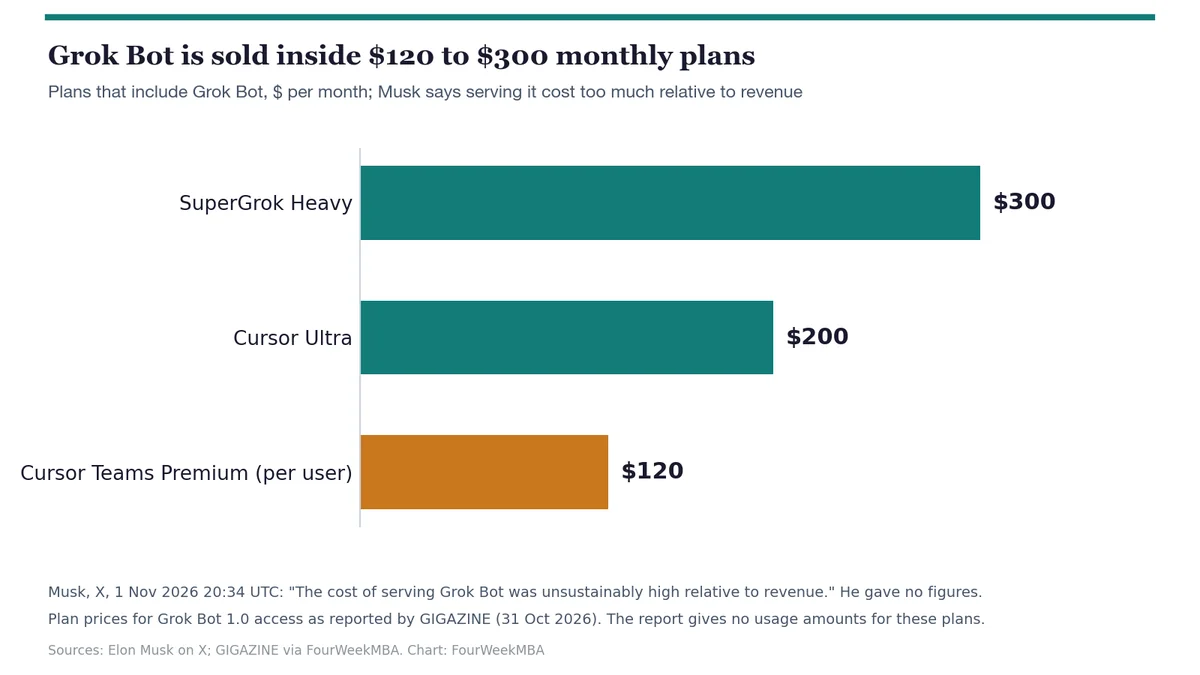
Why Grok Bot Hit Weekly Limits and Strained Flat Subscription Economics
Elon Musk disclosed that Grok Bot's serving costs exceeded revenue, exposing the architectural clash between flat subscriptions and autonomous cloud agents.
Oct 31, 2026
Antigravity in Android Studio: What Rabbit 2 Changes and How to Set It Up
Android Studio Rabbit 2 is stable, adding the Bring Your Own Agent protocol to integrate Google Antigravity, Claude Agent, and Codex with desktop IDE tools.

Oct 25, 2026
Claude Duet Launches Proactive Cloud Agent as Background Tasks Strain Chat Limits
Anthropic launches Claude Duet on cloud virtual machines, shifting from reactive chat to proactive background agency while drawing directly against standard message limits.