Rivian: In-House Agentic Traffic Light Routes Edge and Cloud Models While Air-Gapping Vehicle Actuation
Rivian plans to deploy third-party AI agents like Anthropic's Claude across its electric fleet, utilizing an in-house router to divide edge and cloud tasks while maintaining an absolute hardware firewall against vehicle-level controls.
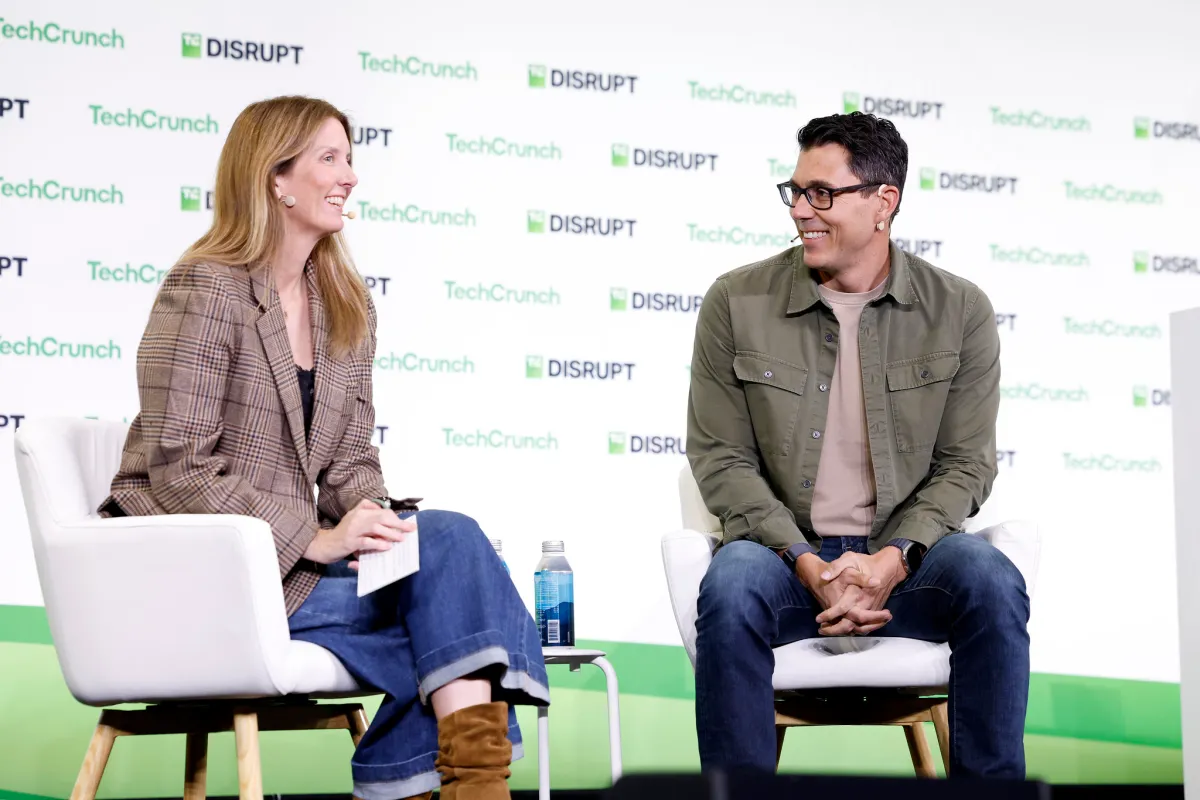
Rivian vehicles will run third-party artificial intelligence agents developed by frontier laboratories, including Anthropic's Claude, under a hybrid compute architecture confirmed by the automaker. Speaking onstage at TechCrunch Disrupt in San Francisco, founder and chief executive RJ Scaringe outlined an in-house framework that arbitrates incoming passenger queries between local vehicle hardware and remote cloud clusters.
The system operates as an operational traffic light that evaluates user requests before assigning them to specialized execution tiers. Simple cabin commands resolve entirely on local silicon, whereas multi-step analytical tasks route upstream to high-capacity cloud models. Scaringe established an unconditional functional boundary around the deployment, stating that autonomous software agents will not receive operational authority over vehicle-level controls such as braking and steering.
The In-House Traffic Light: Dynamically Routing Edge Inference and Cloud Compute
Vehicle cockpits present strict latency constraints that make pure cloud inference unviable for routine physical adjustments. Drivers expect seat heaters, climate toggles, and window defrosting to react within tens of milliseconds. Relying on remote cloud servers over variable 5G cellular uplinks introduces unpredictable roundtrip delays, connection dropouts in rural corridors, and unnecessary carrier bandwidth costs. To bypass this latency barrier, cabin automation executes via local edge models running directly on embedded processors.
"Think of it as like a traffic light," Scaringe said when describing the routing decision engine.
The system evaluates the syntactic complexity and functional intent of each verbal request before dispatching it through computational layers. Basic mechanical requests execute immediately on the vehicle edge using compact language models optimized for low-latency inference. When a driver poses open-ended inquiries, contextual scheduling tasks, or multi-turn reasoning requests, the framework forwards the prompt to remote frontier infrastructure. "If it's a more complex question, it can go up to the cloud, and then even for that, we have different models that we use," Scaringe noted during his presentation. Supporting cross-device continuity (such as retrieving a culinary plan initiated on a smartphone and continuing the discussion in the cabin) demands direct protocol coordination with frontier labs to manage backend plumbing without leaking telemetry.
The Actuator Firewall: Enforcing ASIL-D Safety Boundaries Against Probabilistic AI
Safety-critical automotive systems require deterministic performance guarantees that probabilistic neural networks cannot provide. Under the international functional safety standard ISO 26262, steering actuation and electronic stability control fall under Automotive Safety Integrity Level D (ASIL-D). This standard mandates worst-case response latencies strictly below twenty milliseconds alongside fault-tolerant architectural redundancy spanning dual microcontroller channels.
Large language models and autonomous agents operate through stochastic token generation, making their outputs vulnerable to hallucination, unexpected tool invocations, and unpredictable execution latency. Granting an unconstrained agent direct write access to the controller area network (CAN bus) or Ethernet backbone that modulates steering angles and hydraulic braking pressure would violate foundational automotive safety mandates. A conversational assistant must never share memory space or bus arbitration priority with safety-critical electronic control units. Scaringe dismissed any prospect of handing vehicle-level actuation to agentic software during his Disrupt appearance.
"You wouldn't want an agent to determine, 'hey, it's time to apply the brakes, or time to steer the vehicle,' so anything that's vehicle-level controls are not being handed to an agent," Scaringe said.
Proprietary Cabin Stacks: Why Direct Hardware Access Outweighs Phone Projection
Rivian's decision to build its software stack from scratch rather than adopting Apple CarPlay or Android Auto created early friction with consumers accustomed to smartphone mirroring. That proprietary posture now provides the hardware abstraction layer needed to deploy deep cabin intelligence throughout cockpit systems. Handset projection interfaces operate inside sandboxed display containers, isolating apps from the vehicle's embedded sensor array.
In its second-generation R1 vehicles, the automaker replaced legacy distributed electronic control units with a centralized zonal architecture. Seven domain controllers now manage vehicle functions, with perception pipelines concentrated in the proprietary Rivian Autonomy Platform (RAP1) processor. Direct ownership of vehicle firmware gives Rivian uninterrupted access to cabin microphones, seat occupancy sensors, and thermal management zones. By controlling the entire software stack, the engineering team can expose structured vehicle telemetry to authorized edge models while maintaining hardware-enforced firewalls between infotainment and drive controllers.
| Architecture Layer | Rivian In-House Stack | Apple CarPlay / Android Auto | Tesla In-Cabin OS |
|---|---|---|---|
| Compute Location | Hybrid: Local edge silicon + Cloud routing | Host smartphone (Screen projection) | Hybrid: AMD infotainment APU + Cloud |
| Telemetry Access | Full bidirectional access to cabin sensors | Sandboxed audio and basic display data | Full bidirectional access to vehicle bus |
| Actuator Isolation | Hardware firewall / Domain separation | Physical isolation (No CAN bus write) | Dedicated gateway between APU and drive CAN |
| AI Integration | Multi-model agent router (Anthropic Claude) | Siri / Google Assistant device relay | Proprietary xAI Grok and Grok Bot |
| Ecosystem Dependency | Custom Linux/Android automotive stack | iOS or Android handset tethering | Proprietary custom Linux stack |
Tesla established an earlier precedent for embedded voice intelligence by integrating xAI's Grok and Grok Bot into its central displays, relying on its custom Linux foundation to bypass smartphone intermediaries. Rivian follows an analogous architectural trajectory but diverges by opening its cabin to competing external laboratories rather than relying exclusively on captive proprietary weights. The operational viability of that multi-vendor framework rests entirely on whether Rivian can sanitize external API payloads before they reach cabin communication gateways.
The December Autonomy Milestone: Unresolved Integration Details Ahead
Rivian has directed engineering inquiries regarding deployment timelines and commercial subscription structures to its upcoming Autonomy and AI Day, scheduled for December 9, 2026, in San Francisco. The automaker previously expanded its onboard assistant to interface with Google Calendar and Gmail services in software version 2026.36, but third-party agents introduce broader identity and security challenges. Systems architects will need to demonstrate that external models cannot inject unauthorized instructions into vehicle subnets.
Engineers have yet to disclose the OAuth authentication mechanisms that will bind external model subscriptions to vehicle profiles, nor has the company confirmed whether cellular inference will require its paid Rivian Connect+ data package. The upcoming technical gathering will detail the underlying API boundaries, edge model quantization parameters, and carrier throughput benchmarks as Rivian prepares to transition its traffic light routing engine from prototype preview to customer fleet deployment.
Was this article helpful?
Your feedback helps our editorial team refine reporting depth and accuracy.
Related Articles
Sep 7, 2026
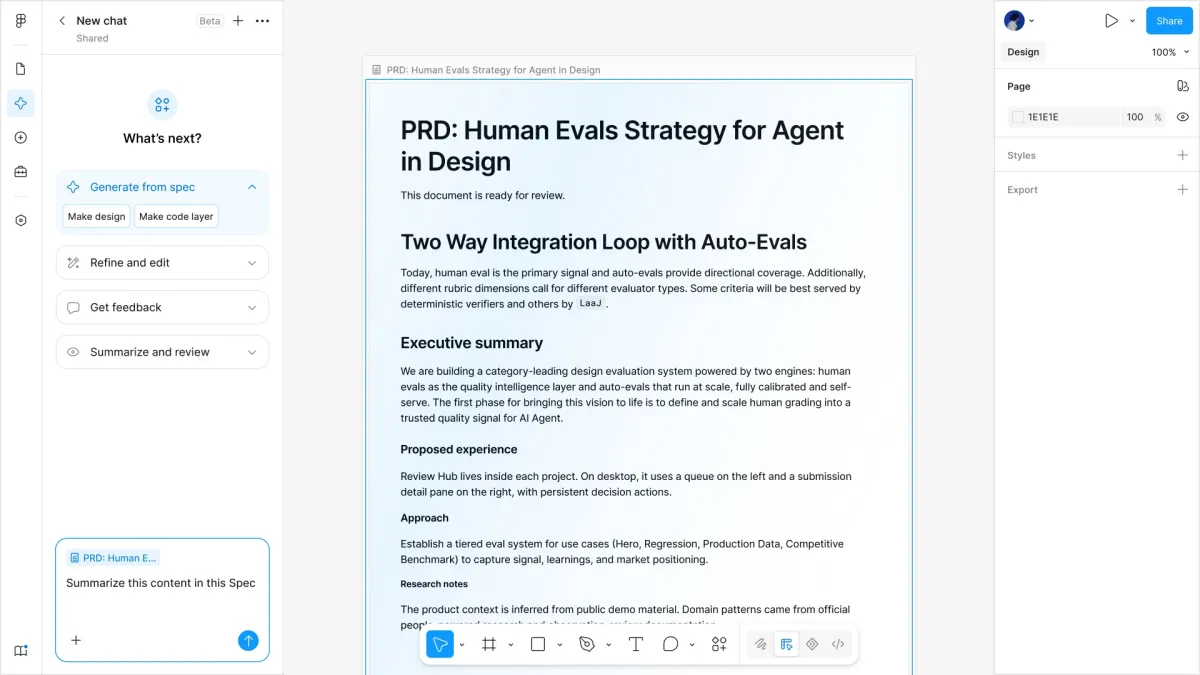
Figma: Specs and Code Layers Define Guardrails as AI Code Creation Outpaces Releases by 13x
As AI-generated code volume spikes seventeenfold while software deployments inch forward by a mere thirty percent, Figma converts markdown documentation and live canvas execution into architectural guardrails for autonomous agents.
Sep 1, 2026
American Express: Intent Intelligence Framework Decouples AI Agent Actions From Raw Payment Credentials
American Express introduces the Intent Intelligence Framework, using Proof of Intent Tokens to secure AI agent transactions and prevent unauthorized purchases.

Aug 30, 2026
Cerebras: Andrew Feldman Outlines Hybrid Edge Architecture as Data Center Capacity Reaches Physical Limits
Cerebras CEO Andrew Feldman reveals that physical data center capacity shortages forced OpenAI to deploy Nvidia GPUs, while predicting hybrid home AI appliances with local security perimeters.