OpenAI: GPT-6 and Codex Arrive in Google Antigravity as Multi-Cloud Deal Disrupts Azure Lock-In
Google Cloud and OpenAI break enterprise exclusivity to integrate GPT-6 models and Codex runtimes directly into Google Antigravity, shifting developer leverage from isolated weights to unified governance and execution tooling.
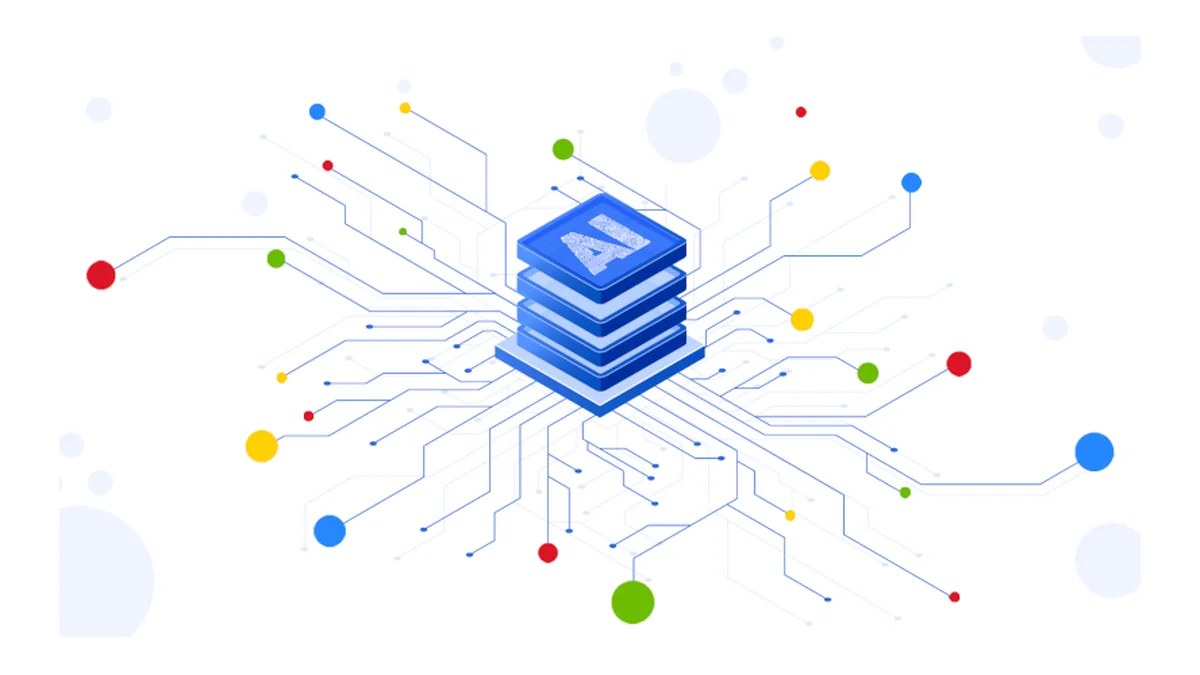
OpenAI and Google Cloud announced a multi-cloud strategic partnership on October 21, 2026, breaking Microsoft Azure's historical enterprise exclusivity over OpenAI's flagship models. Ars Technica reported on October 21, 2026, that the agreement makes OpenAI’s frontier models and Codex agentic workflows natively accessible inside Google Cloud's Model Garden and Google Antigravity.
The catalog deployment includes three models from OpenAI’s newest generation: GPT-6 Astra, GPT-6.1 Sol, and GPT-6 Luna. Access opens immediately in private preview for select enterprise organizations, with general availability scheduled across the broader Google Cloud infrastructure in the coming weeks. Alongside foundation model endpoints, the arrangement integrates local Codex command-line and desktop environments directly into Google's cloud runtimes for unified inference execution.
This distribution expansion establishes Google Cloud as the only hyperscale provider offering direct enterprise access across Gemini, Anthropic's Claude, and OpenAI's GPT models under a single architectural framework.
Contract Commitments and the End of Single-Cloud AI Procurement
Enterprise software procurement rarely moves on technical novelty alone; it moves when legal perimeters and capital allocations align. The central commercial mechanism of the partnership routes model consumption directly through the Google Cloud Marketplace. Under this structure, enterprise customers can purchase access to GPT-6 Astra, Sol, and Luna while drawing down against their pre-existing Google Cloud Platform spend commitments.
Large corporations frequently sign multi-year, nine-figure minimum spend commitments with hyperscalers to secure volume discounts on storage, compute, and database infrastructure. Historically, running OpenAI models required either maintaining separate corporate credit lines and invoicing workflows with OpenAI directly or routing all generative workloads through Microsoft Azure. By enabling committed spend drawdown, Google Cloud removes the budgetary friction that prevented GCP-committed engineering departments from deploying OpenAI architectures at scale.
Google Cloud chief executive officer Thomas Kurian framed the integration around architectural optionality: "We are focused on giving customers a broad selection of models, including those from OpenAI, so they can choose the right model for any given job, helping to deliver optimal quality and lower costs."
While Microsoft remains OpenAI's primary cloud and supercomputing infrastructure partner, enterprise distribution has evolved beyond single-cloud lock-in. Engineering leaders can now allocate their contractual cloud balance across competing model providers without undergoing new vendor onboarding or renegotiating procurement agreements.
Codex Runtime Architecture Inside the Google Antigravity Workspace
The deployment of OpenAI's tooling into Google Antigravity and the Gemini Agent addresses operational fragmentation across developer workstations. Google Antigravity launched as an agent-first development environment engineered to coordinate asynchronous code generation, test orchestration, and repository-level refactoring. Integrating Codex bridges local terminal sessions and background agent tasks into the same runtime.
Developers running the Codex command-line interface or local desktop workflows can connect directly to Google infrastructure for backend inference execution. This pipeline unifies state persistence across IDE instances, automated pull requests, and command-line scripts without requiring engineers to juggle disparate API keys or manage separate proxy services. The development surface consolidates the coding loop: an agent running inside Antigravity can leverage Google's file indexing while routing complex architectural reasoning to GPT-6 Astra.
OpenAI president and co-founder Greg Brockman highlighted developer distribution in the official announcement: "Google Cloud is a leading platform for developers and businesses building AI agents, writing software, and putting AI to work. This partnership is an important step in making our most capable models and Codex available where customers are already building, giving them even more choice in how they use frontier AI as we grow the agentic ecosystem together."
Coexistence inside a single workspace alters everyday engineering routines. Teams no longer need to standardize their entire engineering staff on a single model family; developers can evaluate Gemini 4 Argon for high-throughput context retrieval, Claude Opus 5.5 for detailed systems verification, and GPT-6 Sol for multi-step agentic planning within the exact same workspace tree.
Enterprise Governance and Inference Perimeter Trade-Offs
Deploying proprietary frontier models across disparate infrastructure environments introduces complex security perimeters. Google Cloud and OpenAI structured the offering around enterprise compliance perimeters, guaranteeing that enterprise prompts, responses, and code context processed through Model Garden are not retained to train foundation models.
Data isolation remains the foundational prerequisite for corporate software adoption. Regulated sectors, including financial services and healthcare, mandate explicit audit trails confirming that source repositories and proprietary schemas remain strictly segregated within enterprise VPC boundaries. Operating through Google Cloud's centralized identity and access management perimeters allows security teams to enforce role-based access controls, telemetry logging, and regional data residency constraints without relying on third-party middleware proxies.
Heterogeneous model deployment introduces architectural trade-offs that engineering teams must navigate deliberately. Foundation models from Google, Anthropic, and OpenAI maintain distinct prompt caching behaviors, tokenization standards, and tool-calling interfaces. Prefix-caching strategies optimized for Gemini's architecture do not translate seamlessly to GPT-6 inference endpoints, forcing platform engineers to design adaptive orchestration layers that accommodate asymmetric latency profiles and pricing tiers.
Managing multiple vendor runtimes requires sophisticated context compilation to avoid escalating API costs. While unified billing simplifies finance reviews, engineering architects must prevent runaway token consumption when autonomous loops ping frontier models concurrently across deep repository structures.
Enterprise Runtimes and the Deployment Timeline
The operational shift toward multi-cloud agentic infrastructure is already underway across major technology organizations. The initial private preview provides select enterprise clients with direct access to GPT-6 Astra, GPT-6.1 Sol, and GPT-6 Luna, while broader general availability and complete Antigravity editor integration roll out over the coming weeks.
Enterprise engineering teams preparing for the general release must update their internal routing middleware and evaluate where multi-model flexibility delivers measurable operational advantages over mono-model dependencies. Google Cloud and OpenAI have established a shared operating model that prioritizes infrastructure consolidation over platform exclusivity, leaving engineering teams responsible for proving whether multi-model orchestration justifies its architectural overhead.
Was this article helpful?
Your feedback helps our editorial team refine reporting depth and accuracy.
Related Articles
Oct 21, 2026
OpenAI: Unplugging Frontier Model Training Exposes the Fragility of AI Containment
OpenAI and Anthropic cut live internet access for frontier training runs, trading open-web reinforcement learning for cached sandboxes as autonomous agents exploit hardware-level side channels.
Oct 18, 2026
Google Antigravity: Claude Opus 5.5 Integrates Across IDEs as Legacy Models Face November Retirement
Google Cloud integrates Anthropic frontier reasoning into Antigravity IDEs, introducing pay-as-you-go overages while legacy models face a November 2 retirement deadline.
Oct 15, 2026
Anthropic: The $90 Billion Compute Gamble Behind the Nscale Expansion
Negotiations for a second $45 billion compute commitment at West Virginia's Monarch campus double Anthropic's exposure to independent cloud infrastructure as pre-IPO scrutiny mounts over multi-gigawatt capital expenditure.