Elorian: Glimpse Introduces Visual Scratch Space to Bypass Tokenized Multimodal Bottlenecks
Palo Alto startup Elorian released Glimpse, an AI vision model that returns to raw pixels mid-inference through a visual scratch space rather than relying on lossy static tokenization.
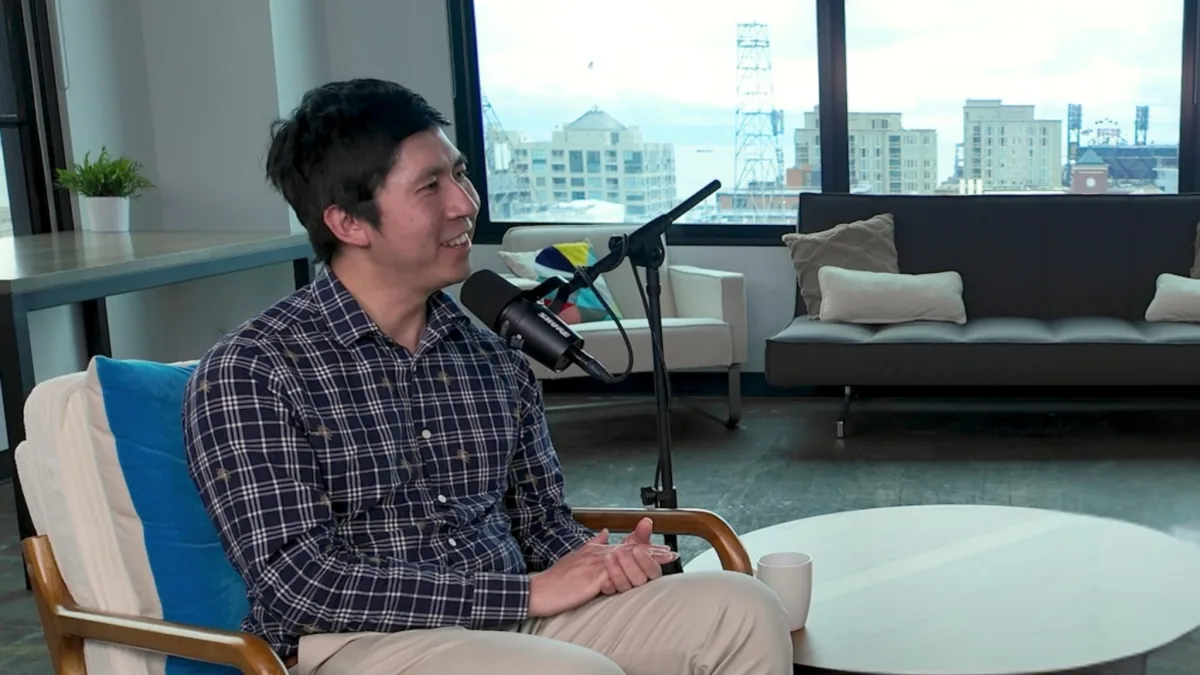
Palo Alto artificial intelligence startup Elorian released its first model, Glimpse, on Friday as a research preview with waitlist-only API access, TechCrunch exclusively reported. The company completed a $55 million seed round at a $300 million valuation co-led by Striker Venture Partners, Menlo Ventures, and Altimeter Capital, with capital participation from Nvidia and Google chief scientist Jeff Dean.
The release marks an empirical challenge to the architectural foundations of contemporary multimodal vision models.
The Tokenization Bottleneck in Multimodal Vision Transformers
Standard vision-language models process visual inputs through a single unidirectional projection, segmenting raw pixels into static grids before passing resulting token embeddings to autoregressive decoders. Under standard Vision Transformer baselines, a high-resolution input collapses into discrete patches of 16 by 16 pixels, discarding fine-grained sub-pixel geometry and vector coordinates before text generation begins. This static encoding creates a structural ceiling where models examine visual data once and subsequently reason exclusively through verbal approximations.
Elorian chief executive Andrew Dai, a former Google DeepMind researcher who co-authored foundational sequence learning literature, describes this convention as forcing software to describe complex imagery purely from memory. During an informal evaluation, Dai photographed a completed board game and asked a leading frontier system to identify the winner; the model failed to determine the game state because board games rely on localized iconography, variable counters, and arbitrary spatial symbols that resist simple verbal summary.
Dai observed that human adults routinely assemble complex furniture by following wordless schematics, whereas standard vision transformers struggle when spatial orientation cannot be translated into linear token sequences.
Architectural Mechanics of the Re-Entrant Visual Scratch Space
Glimpse departs from static patch projection by organizing inference around an active visual scratch space.
Instead of discarding original pixel matrices after an initial forward pass, the runtime preserves bi-directional access to raw visual inputs throughout the reasoning chain. When the model encounters ambiguous boundaries, intricate charts, or cluttered video streams, it generates internal control operations that dynamically crop into designated coordinates or pull specific frames across an input timeline. The model can also execute targeted Python measurement scripts in the background to quantify distances, extract pixel values, and verify visual hypotheses before emitting output tokens.
OpenAI introduced heuristic crop-and-zoom tool calls within its o-series reasoning models in 2025, but Elorian built Glimpse as a unified system centered entirely around active visual resampling. This architecture treats image inspection as an ongoing re-entrant loop, mirroring how human technicians pinch to zoom on technical blueprints or rewind surveillance video to verify minute anomalies.
Compute Efficiency and API Pricing Dynamics
The structural decoupling of visual reasoning from massive parameter scaling alters the underlying compute economics of multimodal deployment.
Elorian trained Glimpse using a small engineering team on a cluster of a few hundred graphics processing units, producing an engine substantially more compact than frontier systems. The startup established API pricing at $0.60 per million input tokens and $3.00 per million output tokens. For enterprise software architects managing large document pipelines, that baseline sits 5.0x below Claude 3.5 Sonnet, which lists standard rates of $3.00 per million input tokens and $15.00 per million output tokens. The platform provides granular inspection capabilities while maintaining cost parity with entry-level text processing models.
| Model | Input Cost ($ / 1M tokens) | Output Cost ($ / 1M tokens) | Visual Architecture |
|---|---|---|---|
| Elorian Glimpse | $0.60 | $3.00 | Re-entrant Visual Scratch Space |
| Claude 3.5 Haiku | $0.80 | $4.00 | Static Patch Tokenization |
| Claude 3.5 Sonnet | $3.00 | $15.00 | Static Patch Tokenization |
| GPT-6 Astra | Custom / Variable | Custom / Variable | Hybrid External Tool Call |
According to internal evaluations published by Elorian, Glimpse recorded higher accuracy than GPT-6 Astra on scientific chart reasoning benchmarks and short-form video captioning tasks. The startup attributes these performance differentials to iterative pixel verification rather than brute-force parameter expansion. Independent enterprise verification suites will test whether these advantages generalize across diverse real-world multimodal workloads.
The Empirical Verification Gap and Physical Latency Constraints
Substantial verification gaps accompany these preliminary performance figures.
Elorian has not released public evaluation datasets, complete parameter specifications, or open-source reproduction code to confirm performance parity across independent enterprise workloads. The iterative mechanics of visual scratch space execution also introduce operational trade-offs for hardware integration. Repeatedly cropping regions, re-encoding pixel patches, and executing auxiliary measurement routines creates sequential round-trips during inference, compounding time-to-first-token latency.
Batch processing pipelines across legal discovery or media indexing can absorb multi-second reasoning cycles without operational disruption. Physical robotic manipulation presents different constraints, where control loops require low response times that iterative sampling routines may complicate without dedicated hardware acceleration. These latency profiles mean that initial enterprise deployments will concentrate in asynchronous document analysis rather than closed-loop robotics.
Deployment Timelines and API Waitlist Onboarding
Elorian plans to onboard enterprise developers from its API waitlist over the coming quarter, prioritizing scientific research facilities and robotics developers managing large video archives. Early access partners will test the visual scratch space runtime against dense technical documentation, automated quality assurance video, and unstructured aerial photography.
The company documented a development schedule targeting direct robotic actuation as its next operational milestone. This roadmap concentrates on translating visual scene understanding into physical motion primitives, testing whether active visual verification can guide robotic arms across factory floors without requiring multi-billion-parameter language models. Industrial validation trials will determine whether re-entrant visual reasoning can sustain real-time execution bounds outside simulated benchmark environments.
Was this article helpful?
Your feedback helps our editorial team refine reporting depth and accuracy.
Related Articles
Aug 29, 2026
Science Corporation: PRIMA Retinal Implant Demonstrates Subretinal Reading in Stargardt Patient
Science Corporation implanted its wireless photovoltaic PRIMA chip into its first Stargardt disease patient, demonstrating high-contrast word reading while highlighting physical limits of subretinal hardware.
Oct 22, 2026
Canva: Craft Decouples Spatial Planning From Pixel Diffusion to Curb Escalating Inference Costs
Canva Craft introduces a two-stage spatial pipeline and distilled model variants to counter third-party API dependencies and rising inference expenses.
Oct 28, 2026
Rogue Markdown in Downloads Folder Can Silently Hijack AI Coding CLI Agents
When plain-text documentation commands terminal execution, unchecked directories transform casual downloads into full system compromise.