Brazil Attracts Global AI Infrastructure Capital Without Securing Domestic Technological Sovereignty
Global tech giants pour billions into Brazilian data centers, but reliance on foreign chips and cloud stacks leaves technological sovereignty unresolved.

Brazil is emerging as a primary battleground for computational infrastructure as Chinese cloud providers and American hyperscalers commit tens of billions of dollars to domestic data centers. While capital commitments expand across both national borders, this influx exposes a fundamental divide between hosting physical server racks and commanding proprietary technological sovereignty.
According to investigative reporting published by Folha de S.Paulo on November 16, 2026, Chinese technology conglomerates are expanding their footprint by leveraging aggressive pricing structures alongside public-sector partnerships. ByteDance, Tencent, Alibaba Cloud, and Huawei are establishing local compute nodes to capture enterprise workloads previously dominated by Western providers. Meanwhile, federal ministries balance bilateral diplomacy between Washington and Beijing to secure computational capacity for public institutions.
Hosting physical hardware on Brazilian territory does not grant institutional control over the underlying microchips, models, and firmware that dictate systemic autonomy.
The Brazilian government enacted the Redata tax regime in September 2026 to incentivize domestic data center construction while mandating research and development reinvestment. Yet federal surveys reveal that approximately 60% of domestic digital workloads continue to depend on services provided from abroad. As geopolitical trade controls over advanced accelerators intensify, the country risks becoming a physical repository for foreign compute rather than an independent technological producer. Navigating this superpower rivalry requires distinguishing physical real estate from sovereign engineering capability.
The Cloud Storage Price Divide and Enterprise Compute Costs
The immediate catalyst for enterprise migration centers on the stark tariff divergence separating Chinese cloud platforms from incumbent American providers. For domestic enterprises training retrieval pipelines or hosting multi-terabyte datasets, input infrastructure expenses determine operational viability.
A commercial pricing audit published on November 16, 2026 reveals that Tencent Cloud offers standard object storage in Brazil at $24.00 per terabyte monthly, compared to $32.60 on Microsoft Azure and $40.50 on Amazon Web Services. Huawei Cloud maintains an established local rate of $34.10 per terabyte, while Alibaba Cloud advertises an entry global baseline of $14.10 per terabyte for baseline storage allocations. Although these raw quotations do not account for cross-region latency, network egress fees, and multi-zone failover redundancy, they establish an undeniable commercial entry wedge.
Local systems integrators report that expanding foundational workloads makes unoptimized Western infrastructure prohibitively expensive for regional software deployments.
Gustavo Silva, chief technology officer at local systems integrator EDS, confirmed this economic friction when evaluating enterprise migrations, noting that "the price of cloud computing has become steep" across domestic deployments. His firm deploys Tencent infrastructure to support biometric recognition systems for public transportation networks in Brasília and state database administration in São Paulo. Concurrently, Tencent provides its Work Buddy agentic platform in Brazil, integrating proprietary Hy4 models alongside commercial application programming interfaces from Google and OpenAI. This hybrid deployment demonstrates how commercial pricing advantages can rapidly normalize foreign application layers within critical domestic utilities.
Megawatt Real Estate Across Pecém, Rio, and São Paulo
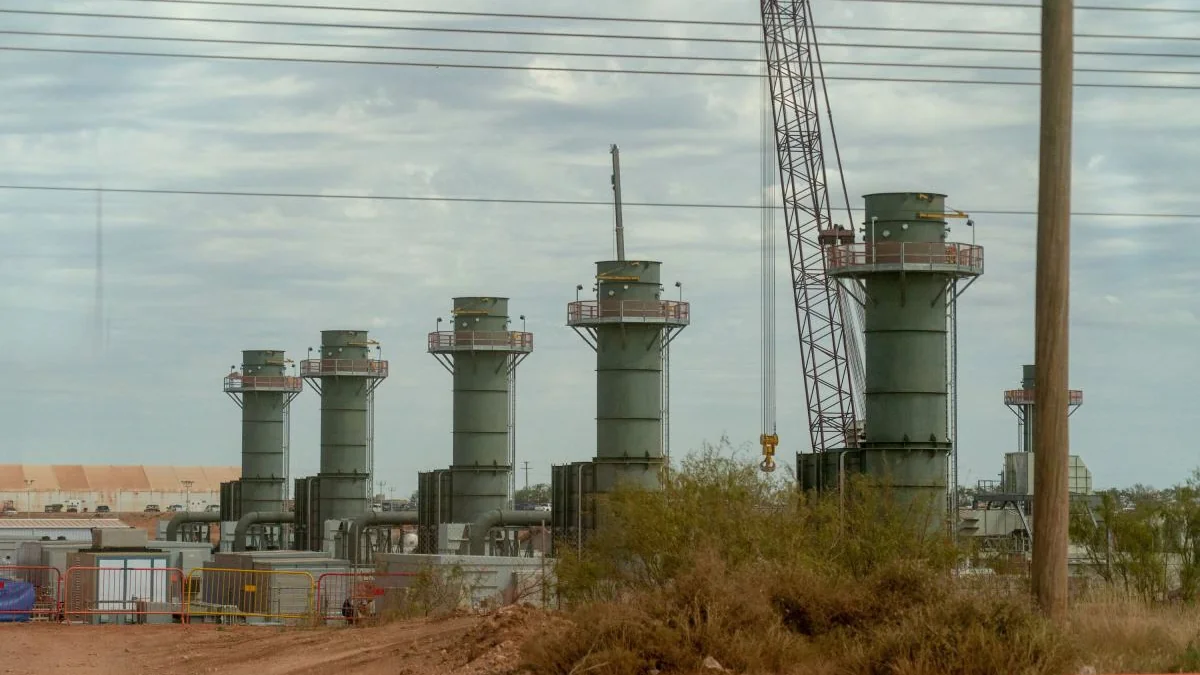
Beyond software tariffs, the physical footprint of global artificial intelligence is transforming Brazilian industrial geography. Proximity to deep-water ports, renewable energy grids, and subsea fiber corridors has shifted strategic development toward the Northeast.
The most capital-intensive single development centers on Caucaia, Ceará, where ByteDance partners with Omnia and Casa dos Ventos to construct a massive data center complex in the Pecém Industrial and Port Complex. The initial phase commands an announced investment of R$ 50 billion, with subsequent expansions potentially reaching R$ 200 billion across four operational phases targeted for initial completion in the third quarter of 2027. This scale dwarfs traditional regional facilities, utilizing coastal wind resources to power computational clusters supporting regional content networks.
American hyperscalers have countered with substantial capital projects concentrated primarily within the industrial perimeter of São Paulo.
Microsoft has allocated R$ 14.7 billion to expand its cloud regions in Hortolândia and Sumaré through 2027, while Amazon Web Services maintains a long-term capital trajectory of R$ 10.1 billion scheduled through 2034. In Rio de Janeiro, Huawei is collaborating with the National Education and Research Network to build an advanced computing campus, supported by R$ 1.28 billion in Brazilian federal public funds to train Portuguese language models. Crucially, public records confirm that this R$ 1.28 billion commitment represents federal budget allocations rather than direct foreign equity from Beijing. The concurrent expansion of Western and Eastern server campuses illustrates how global capital views Brazil as an ideal power repository for intensive workloads.
The Semiconductor Bottleneck and Geopolitical Crossfire
This influx of physical data centers operates against a backdrop of escalating geopolitical friction between the United States and China over semiconductor supremacy. A bilateral summit scheduled for November 19, 2026 between Donald Trump and Xi Jinping highlights continuous bilateral disputes over advanced microchip exports.
While the Trump administration suspended a previous regulatory framework from January 2025 that placed Brazil into an intermediate quota tier for computing capacity, strict export licensing rules remain active. American controls continue to restrict the transfer of high-performance graphics processing units to entities owned or ultimately controlled by Chinese parent companies, even when operating in neutral third countries. Consequently, facilities operated by Chinese providers inside Brazil face persistent legal uncertainty regarding hardware maintenance, component refreshes, and firmware patches.
National computing projects also reflect this dual dependency, balancing competing hardware architectures to avoid exclusive alignment with a single superpower.
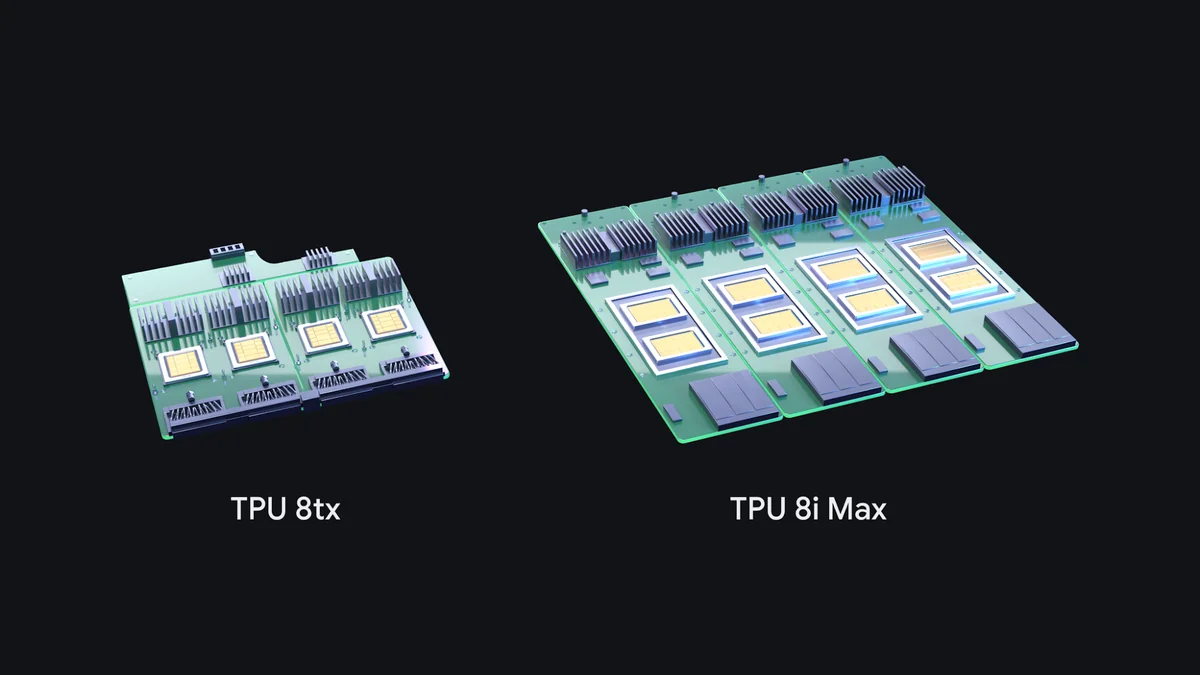
When Brazilian authorities announced supercomputer procurement initiatives in August 2026, the federal administration deliberately divided developmental pipelines between Eastern and Western technology partners. The planned R$ 1 billion supercomputer facility in Macaíba, Rio Grande do Norte, remains subject to public bidding procedures involving Nvidia alongside Google, while secondary research programs engage Chinese state contractors. As demonstrated in broader analyses of hardware acceleration architectures, proprietary software ecosystems create persistent lock-in that cannot be neutralized simply by purchasing bare-metal capacity. Without domestic semiconductor fabrication or open-architecture alternatives, Brazilian computational projects remain exposed to sudden shifts in foreign export policy.
Redata Counterparts and the Illusion of Hosted Sovereignty
To prevent Brazil from functioning as a passive consumer of foreign digital pipelines, the federal government established the statutory framework of the Redata tax regime in September 2026. The legislation grants targeted tariff exemptions for data center hardware while establishing mandatory societal and technological offsets.
Participating operators must reinvest 2% of total acquired equipment value directly into domestic research, development, and technological innovation programs. Furthermore, facilities must guarantee that at least 10% of their operational data processing and storage capacity remains available to the local Brazilian market under non-discriminatory commercial terms. The statutory framework also imposes strict water-use efficiency standards and provides regional financial incentives for installations built across the North, Northeast, and Center-West regions.
Addressing the underlying concentration of digital capital requires moving beyond tax concessions and server housing agreements.
Keyu Jin, an economics professor at the University of Hong Kong, observed during bilateral industry forums that open-weight architectures provide emerging markets with operational autonomy, arguing that "This is one way to build digital sovereignty" without waiting for domestic silicon parity. Yet as systemic investigations into macroeconomic compute debt and circular financing demonstrate, dependent digital ecosystems remain structurally vulnerable to external balance-sheet shocks and licensing revocations. The Brazilian administration faces the technical imperative to convert incoming foreign infrastructure capital into enduring scientific capability before international export controls define the limits of domestic computing.

Written by Adriano Nascentes
Founder & Lead AI Systems Analyst · Verified Staff
Founder and editor-in-chief of Unknown Observer. Technology researcher and software engineer investigating foundation models, autonomous agent runtimes, cognitive architectures, and frontier AI safety.
Was this article helpful?
Your feedback helps our editorial team refine reporting depth and accuracy.