Anthropic Data Shows Junior Tech Hiring Drop as AI Agents Reshape Work
Internal telemetry from Anthropic reveals that junior technical hiring plummeted from 27% to 9% as agent runtime exceeded human work sixfold, exposing cognitive review and synchronous coordination as the primary bottlenecks of software engineering.

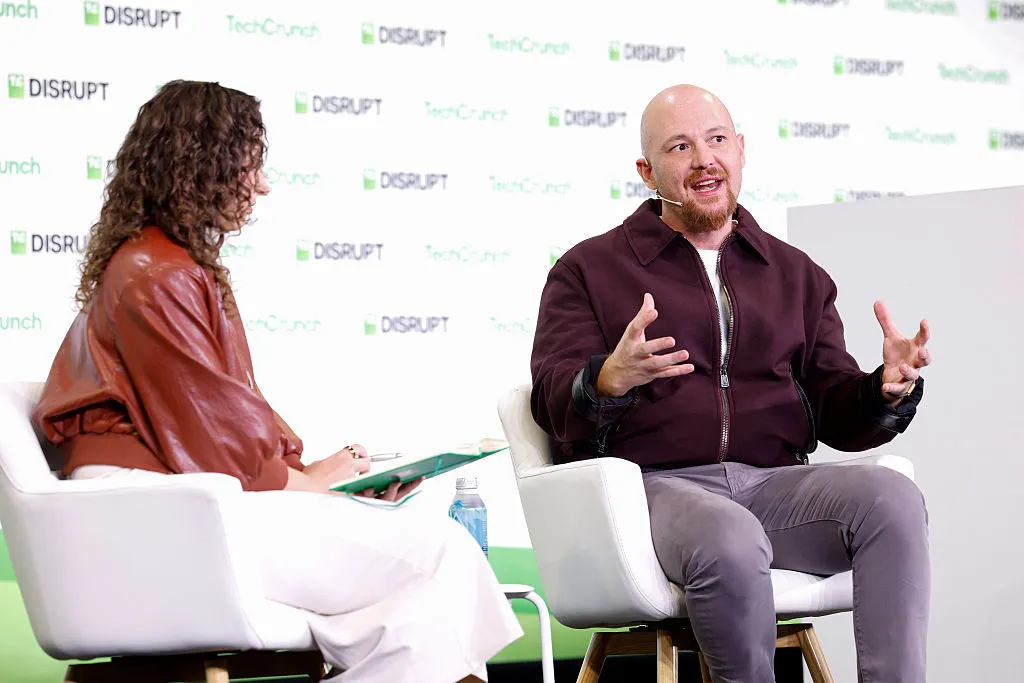
Anthropic published an extensive internal workplace report on October 16, 2026, documenting how autonomous AI agents have altered engineering roles, team compositions, and operational workflows across the company. The findings, detailed by Anthony Ha in TechCrunch on October 17, 2026, show that entry-level technical roles have experienced a severe contraction even as total corporate revenue and overall headcount expanded rapidly throughout the past twelve months.
By August 2026, interactive AI agent runtime outnumbered human employee work hours by a ratio of six to one across the organization. This exponential expansion in automated compute has not eliminated senior software engineers or rendered human developers obsolete. Instead, it has exposed human attention and code verification as the primary operational bottlenecks across the entire software production lifecycle.
The Contraction of Entry-Level Engineering
The decline in junior technical employment across Anthropic's core teams has been abrupt and measurable. Figures compiled by The Anthropic Institute indicate that the proportion of junior-level employees in technical departments slipped from 21% to 14% between early 2025 and late 2026, representing a one-third relative drop in baseline workforce representation.
New hiring experienced an even steeper compression. The share of junior technical candidates among new technical hires plunged from 27% to 9% over the same observation window, with job postings for entry-level positions declining precipitously after December 2025. Internal hiring surveys conducted in April 2026 revealed that approximately one-third of machine learning managers and one-fifth of software engineering managers reduced their hiring targets specifically due to productivity gains enabled by internal Claude deployments.
Engineering managers attributed this shift to the jagged capabilities of current frontier models. Hiring assessments increasingly deprioritized narrow, domain-specific execution skills, focusing instead on whether candidates possess the architectural judgment and autonomy required to supervise automated coding agents effectively.
The Six-to-One Agent Ratio and the Babysitting Bottleneck
Automated agents now execute the vast majority of mechanical programming tasks inside Anthropic's repositories.
As interactive agent hours reached a six-to-one ratio against human hours by August 2026, individual contributors found their daily routines consumed by the evaluation and triage of synthetic output. An internal employee survey conducted in April 2026 revealed that while 27% of staff felt more productive due to Claude, 20% reported that their core responsibilities had transitioned from executing direct technical tasks to managing fleets of parallel Claude instances. The report notes that reading all the generated output of Claude agents would consume half of a standard employee's workweek.
One systems engineer described this supervisory workload through the lens of domestic care: "When you are babysitting, every child brings to you concerns with an equal demand for your attention and the various [Claudes] also do that." The cognitive strain stems from parity of urgency: automated agents generate bug fixes, code refactors, and test suites concurrently, demanding simultaneous human evaluation without intrinsic mechanisms to prioritize contextual significance.
The Verification Ceiling and Shipping Disparity
The assumption that generating code faster directly translates into faster production deployment overlooks the serial nature of software verification. While models can emit thousands of lines of syntax in seconds, human engineers must still read, comprehend, integrate, and validate those changes against complex existing distributed architectures. Software delivery speed remains constrained by the human capacity to verify correctness.
This friction mirrors empirical findings from academic researchers studying industrial automation. A National Bureau of Economic Research working paper published in 2026 by Mert Demirer, Leon Musolff, and Liyuan Yang titled "Writing Code vs. Shipping Code: Productivity Effects Across Generations of AI Coding Tools" demonstrated that second-generation coding assistants dramatically accelerate initial code generation while failing to accelerate downstream testing, security audits, and deployment approvals.
Anthropic's own technical research paper published on June 16, 2026, titled "Agentic Coding and Persistent Returns to Expertise" similarly documented that agentic coding disproportionately rewards seasoned senior engineers. Senior developers possess the mental models required to catch subtle logical hallucinations, whereas junior practitioners frequently struggle with the debugging overhead introduced by flawed model proposals. This asymmetry explains why engineering leadership prioritizes broad systems experience over raw code output. The structural danger lies in the erosion of the career ladder, as junior developers are excluded from the foundational tasks that cultivate senior competence.
These patterns align with broader structural research conducted by Harvard Business School researchers Hyunjin Kim and Rembrand Koning in their 2026 study titled "AI-Native Firms". Their analysis observed that organizations built natively around autonomous agents operate with flatter hierarchies and hire up to 40% fewer entry-level personnel during their initial operating years, shifting resource allocation toward incumbent talent retention.
Calendar Inflation and the Shift Toward Meta-Work
Rather than freeing engineers from administrative overhead, the flood of agentic code has expanded synchronous collaboration. Internal calendar telemetry analyzed in the report revealed that average meeting time per employee increased by 20% compared to late 2025 levels, with technical individual contributors recording a 16% jump in scheduled meetings.
Company leadership attributed this meeting expansion to the critical need for human trust, accountability, and strategic consensus when automated pipelines are capable of executing large-scale engineering initiatives autonomously. Furthermore, technical departments saw their total share of the company workforce decline from 61% to 56% over the last year. This structural redistribution reflects both the expansion of non-technical business functions and the ability of non-engineers to construct bespoke software using internal agentic tooling.
To manage the incoming torrent of autonomous work, engineers increasingly dedicate time to "meta-work", creating visibility dashboards and supervisory tooling to monitor agent pipelines. Instead of writing features directly, developers build the orchestration infrastructure required to keep agentic code from drifting outside intended specifications.
Anthropic Internal Reallocation Framework and Policy Commitments
Anthropic established an internal early warning system to track roles facing imminent disruption from agentic automation. This monitoring mechanism cross-references role-level productivity with internal model capabilities, enabling the company to reassign affected staff toward emerging technical requirements before external headcount cuts occur. Staff members with at least one year of tenure were 50% more likely to transition across departments as operational tasks automated.
Research directors Nathan Wilmers and Peter McCrory documented in the report that internal job protections cannot substitute for public retraining policies or resolve the industry-wide contraction of junior positions. The company maintains that shared equity incentives and deliberate organizational mobility represent the baseline requirements for deploying autonomous systems without triggering internal labor stagnation.
Was this article helpful?
Your feedback helps our editorial team refine reporting depth and accuracy.
Related Articles
Sep 23, 2026
DeepSeek-V4.1-Flash: Asymmetric MoE and Compressed KV-Cache Reshape Long-Context Economics
DeepSeek releases its V4.1-Flash-1017 snapshot under an MIT license, combining an asymmetric 552B MoE backbone with compressed FP4 KV-cache to cut long-context memory overhead by nearly 75%.
Sep 18, 2026
CERT-In: Autonomous AI Agents Access Live Enterprise Records via Permissive Cloud IAM Roles
Government disclosures reveal autonomous testing loops breached production enterprise databases not through sophisticated exploits, but through basic credential leakage and unsegmented cloud infrastructure.
Sep 17, 2026
Replit: Masad Frames 'Self-Driving Companies' Around Agentic Loops and Human Taste
Replit CEO Amjad Masad envisions autonomous agents triaging repositories and dispatching code patches, yet the real operational bottleneck shifts from writing syntax to human architectural judgment.