Anthropic Commits $3.4 Billion to Gas Turbines as Frontier AI Hits Physical Grid Limits
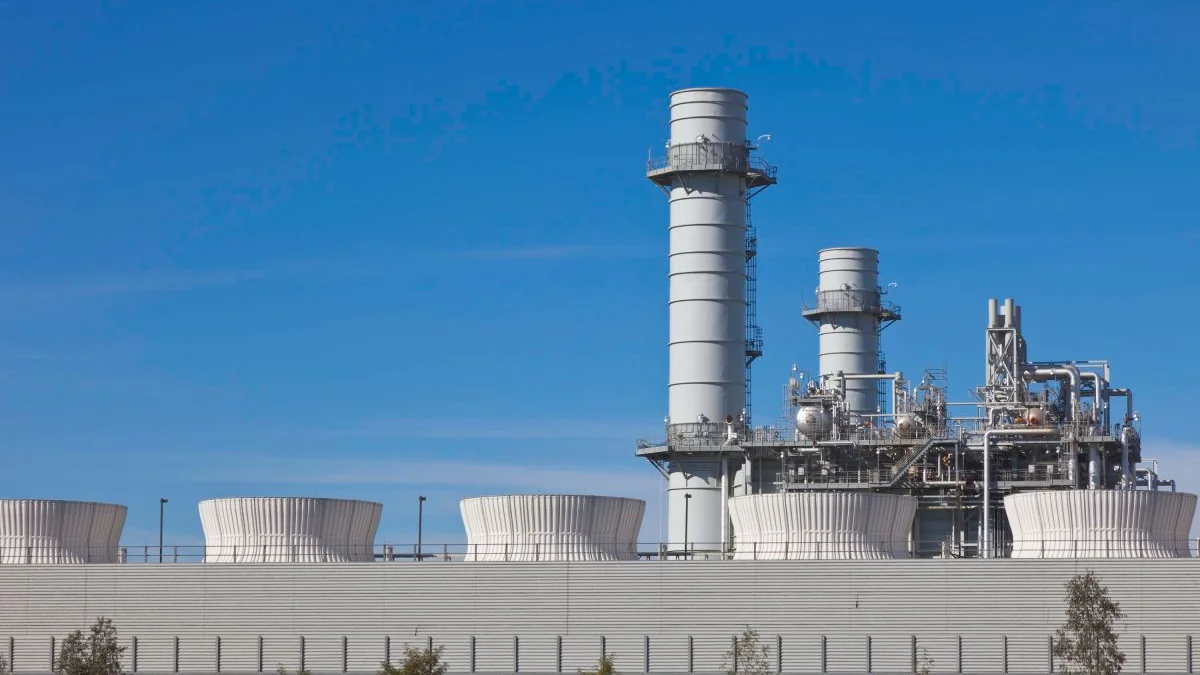
Anthropic committed roughly $3.4 billion to secure 1.7 GW of Caterpillar natural gas generators, bypassing public utility backlogs to power AI compute campuses.
The artificial intelligence sector has collided with the physical constraints of the electrical transmission grid. Frontier model developers can no longer secure sufficient compute purely by purchasing cloud capacity and waiting for public utilities to build high-voltage substations.
Anthropic has committed roughly $3.4 billion to secure 1.7 gigawatts of natural gas-fired generation equipment, according to reporting by the Financial Times. The transaction represents the largest known individual procurement of dedicated power hardware by a standalone artificial intelligence lab. Furthermore, the move marks a structural transition where software labs must finance their own generation assets to keep inference clusters operational.
The OnePWR Hardware Takeover and the Rush for Heavy Turbines
The deal originated through an unconventional supply-chain intervention rather than a traditional utility power purchase agreement.
OnePWR Solutions, an equipment and microgrid supplier based in San Antonio, Texas, had previously secured manufacturing slots in Caterpillar’s industrial turbine pipeline. However, OnePWR lacked the capital necessary to execute the multibillion-dollar acquisition. Anthropic intervened directly to assume OnePWR's manufacturing orders for heavy-duty gas turbines from Caterpillar. In addition, Anthropic took over the associated engineering and construction agreements required to assemble the generation sites.
Corporate structure remained strictly segregated during the maneuver. Anthropic did not acquire OnePWR equity and did not incorporate its technical personnel, opting instead to control the underlying hardware slots and deployment contracts.
The procurement is structured to deliver and install 1.7 gigawatts of capacity over the next two years. In energy terms, 1.7 gigawatts represents peak continuous generation comparable to the electrical output of commercial multi-reactor nuclear plants or large utility stations. Delivery timelines will pace the phased expansion of dedicated computing campuses.
A necessary factual qualification frames the transaction, as detailed in reporting by Reuters.
Reuters noted that neither Anthropic nor OnePWR responded to requests for comment regarding the transaction. In addition, reporters could not independently verify the financial terms reported by the Financial Times. The figures reflect reported industry coverage rather than an official corporate press release. Consequently, the commercial details remain bounded by investigative reporting standards.
Gridlock at the Substation: Why Frontier AI Is Bypassing Public Utilities
Securing compute clusters running tens of thousands of specialized accelerators is no longer restricted by server manufacturing alone. Modern AI clusters require uninterrupted, high-density baseload power, step-up transformers, transmission lines, and dedicated switchyards that public utilities are struggling to deliver.
The waiting period for interconnecting large electrical loads to regional transmission systems in the United States currently averages between four and seven years. Large industrial transformers face procurement backlogs exceeding three years. Furthermore, regulatory approval for high-voltage corridors often stalls in inter-state administrative disputes.
Anthropic explicitly recognized this structural bottleneck in its regulatory disclosures.
In a formal regulatory filing with the SEC, the company noted that transmission interconnection queues are lengthening across major operating regions. The filing explicitly warned that utility delays pose tangible operational risks to its expansion timeline. In addition, severe transformer shortages threaten the pace of future hardware clusters. These institutional disclosures document how infrastructure lag directly impacts foundation model roadmaps.
When access to the public electrical grid becomes a multi-year chokepoint, behind-the-meter generation emerges as an economic necessity. Operating natural gas generators directly adjacent to data center campuses allows developers to bring compute online without waiting for regional transmission operators to complete lengthy interconnection studies.
Natural gas provides dispatchable, continuous energy that matches the 24/7 duty cycle of frontier training and real-time enterprise inference workloads. While utility-scale solar and wind generation deliver lower levelized generation costs, their intermittent profiles require massive battery storage or grid backup to prevent server brownouts. For an AI developer facing intense competitive pressure to deploy Claude capacity, natural gas offers immediate physical certainty. Dispatchable fuel pipelines deliver the consistent voltage stability essential for dense GPU clusters.
The Behind-the-Meter Frenzy Across Frontier Model Builders
Anthropic’s multi-gigawatt gas procurement is part of a broader industrial realignment across the technology sector. Hardware availability has ceased to be the sole determinant of AI competitiveness; uninterrupted power delivery now dictates deployment speed.
In Memphis, xAI deployed dozens of gas combustion turbines operating at roughly 400 megawatts of combined output to energize its Colossus supercomputing cluster. The deployment bypassed local electrical grid constraints to bring hardware online in record time. However, the installation sparked localized municipal disputes regarding air quality and operating permits.
Hyperscalers are pursuing parallel capital strategies across every major generation category.
Microsoft signed landmark agreements to revive decommissioned commercial nuclear capacity at Three Mile Island. Meanwhile, Amazon Web Services and Google have committed billions to behind-the-meter nuclear and renewable co-location deals. Hyperscale competition has effectively absorbed long-term industrial turbine capacity across the manufacturing sector. These concurrent megadeals reflect a synchronized corporate migration toward captive power reserves.
The cumulative shift toward dedicated fossil generation is already visible in national planning data. A comprehensive report from the Environmental Integrity Project titled The Power Behind AI identified 74 natural gas-fired power plant projects, totaling 143 gigawatts of proposed capacity, planned across the United States specifically to support data centers.
The Environmental Integrity Project estimated that these 74 proposed gas installations could collectively emit up to 662 million tons of greenhouse gases annually if fully built, alongside 160,000 tons of localized criteria air pollutants such as nitrogen oxides and fine particulates. While these aggregate national figures reflect the broad pipeline across the entire data center industry rather than Anthropic's specific equipment purchase, they illustrate the scale at which digital computation is revitalizing fossil fuel combustion. In addition, regional air basins face heightened cumulative emissions burdens from clustered generation facilities.
Corporate Climate Pledges Collide With Real-World Workloads
The move into dedicated gas generation creates an undeniable tension with earlier corporate sustainability commitments. Frontier AI companies have frequently framed foundation models as accelerators for climate research and grid optimization, yet their near-term infrastructure choices rely heavily on hydrocarbon combustion.
Earlier in the year, Anthropic attempted to establish formal safeguards around its energy expansion. In an official public statement released on February 11, 2026, titled Covering electricity price increases, the company pledged to pay 100% of the grid infrastructure upgrade costs needed to connect its data centers. The policy explicitly promised to work with utilities to bring net-new clean energy online and shield residential consumers from rising utility bills.
Financing dedicated behind-the-meter gas generators provides an operational workaround to public ratepayer backlash.
Generating electricity on-site ensures that data center consumption does not directly compete for public power reserves on the residential distribution grid. Nevertheless, dedicated gas plants lock in fossil fuel infrastructure for years. Capital allocations directed toward carbon-emitting turbines complicate corporate net-zero pledges across the enterprise tier. Foundation model developers now navigate competing obligations between rapid model deployment and environmental stewardship.
This operational compromise reflects the sheer momentum of competitive AI scaling. Foundation model laboratories cannot afford multi-year pauses while waiting for clean baseload alternatives, advanced geothermal, or small modular nuclear reactors to clear commercial hurdles in the 2030s.
Industrial Power Realities Redefine Global AI Geography
The escalating power crunch is rewriting the geopolitical playbook for where artificial intelligence infrastructure will physically reside. Markets that combine reliable transmission infrastructure with abundant, low-carbon baseload energy are becoming prime targets for hyperscale investment. National grid architectures are emerging as sovereign technological assets.
Developing nations and diversified energy exporters are attempting to capitalize on this dynamic.
Countries like Brazil, which generates over 80% of its electrical grid from renewable hydro, wind, and biomass, enacted targeted incentive frameworks such as Law 15,504 (Redata) to attract international data center developers seeking clean power profiles. However, clean energy on paper does not automatically translate into scalable digital infrastructure on the ground. As state planners at Brazil’s Energy Research Office (EPE) have documented in analytical reports on data center loads, massive computing clusters require heavy transmission capacity, robust cooling availability, and ultra-low-latency fiber conduits that cannot be improvised overnight. Sovereign renewable reserves require matching electrical infrastructure to support frontier computational workloads.
The reported $3.4 billion hardware commitment by Anthropic confirms that artificial intelligence has outgrown the purely digital realm. The next phase of foundational AI competition will be decided as much in machine shops, gas pipelines, and switchyards as in neural network architectures and software optimization passes.

Written by Adriano Nascentes
Founder & Lead AI Systems Analyst · Verified Staff
Founder and editor-in-chief of Unknown Observer. Technology researcher and software engineer investigating foundation models, autonomous agent runtimes, cognitive architectures, and frontier AI safety.
Was this article helpful?
Your feedback helps our editorial team refine reporting depth and accuracy.