Jensen Huang Leaves NVIDIA Amid Board Inquiry and Succession Test
NVIDIA co-founder Jensen Huang resigned as CEO and board member. Interim CEO Colette Kress takes charge amid independent inquiries and governance shifts.
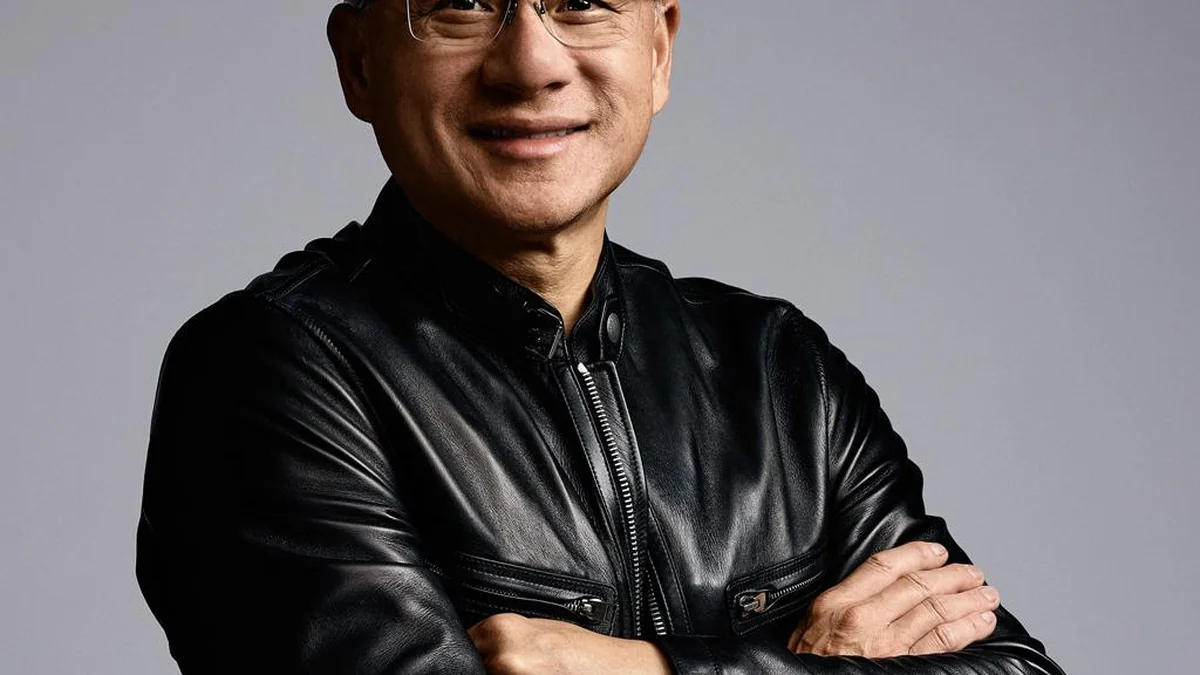
NVIDIA announced on November 12, 2026, that co-founder Jensen Huang resigned immediately as President, Chief Executive Officer, and member of the Board of Directors. The unexpected departure shifts executive governance to Chief Financial Officer Colette Kress as interim chief executive, triggering a leadership test at the core of the global artificial intelligence compute supply chain.
The Regulatory SEC Filing and the Interim Succession Mandate
The corporate transition took immediate legal effect through a SEC Form 8-K regulatory filing submitted by NVIDIA, confirming that Huang relinquished all administrative, operational, and board responsibilities inside the company. According to the official NVIDIA investor announcement, the board "appointed Colette Kress as Interim Chief Executive Officer" while confirming she will maintain her continuous duties as Chief Financial Officer, an executive post she has held since 2013. The governance overhaul separates operational execution from board oversight by elevating Harvey C. Jones, a semiconductor pioneer and former Synopsys chief executive who has served on NVIDIA's board since its founding in 1993, as the company's first-ever independent Chair of the Board.
Capital markets registered the sudden leadership vacuum across semiconductor equities during Thursday trading sessions. NVIDIA shares dropped over ten percent intraday before paring losses to close down 4.3 percent, while competing accelerator suppliers experienced immediate valuation gains as Reuters reporting confirmed "Broadcom and AMD shares gained approximately 6%" in parallel trading.
The divergence reflects institutional apprehension regarding executive transitions at enterprises where product roadmaps and strategic customer allocations have historically concentrated within a single founder. Kress brings more than a decade of financial governance, having managed NVIDIA's balance sheet through its ascent from graphics processing unit designer to global technology giant. Her interim mandate focuses on stabilizing enterprise customer operations while the board conducts a formal search examining both internal executives and outside candidates for the permanent chief executive role.
The Scope of Independent Inquiry and Market Containment
Huang's sudden resignation developed across a week of escalating corporate scrutiny in early November. On November 8, NVIDIA acknowledged that its board initiated an independent inquiry into reports regarding foreign intelligence outreach involving the chief executive. Two days later, the independent directors formally retained the legal defense firm Wachtell, Lipton, Rosen & Katz to conduct an external review into undisclosed personal relationships and internal disclosures.
Regulatory boundaries require distinguishing verified corporate filings from investigative claims reported by trade outlets. While media reports indicated board deliberations reviewed relationships involving corporate personnel, United States national security authorities reached no determinations regarding espionage activities. NVIDIA's regulatory disclosures document a voluntary resignation formally accepted by the board rather than an administrative termination for cause. This institutional distinction separates verified corporate governance actions from uncorroborated public allegations.
Retaining Wachtell Lipton isolates core business units from immediate governance volatility. Formalizing the leadership review through specialized external counsel documents board deliberations under structured legal privilege. This separation prevents executive inquiries from altering existing commercial partnerships or interfering with long-term customer commitments.
Three Decades of Centralized Governance and Silicon Execution
For thirty-three years, Jensen Huang maintained an operational hierarchy that departed from standard enterprise conventions in Silicon Valley. Operating with more than forty direct executive reports, Huang eliminated bureaucratic filtering layers to personally orchestrate silicon development cadences, advanced packaging procurement with TSMC, and direct supply allocations with hyperscalers including Microsoft, Meta, and Amazon Web Services. This flat operational velocity drove the rapid annual transition across accelerated computing architectures, advancing from Hopper systems to Blackwell racks and the Vera Rubin compute platform.
Physical accelerator silicon represents only half of NVIDIA's commercial defensive moat across enterprise data centers.
The foundation of platform lock-in remains CUDA, the proprietary parallel computing architecture and programming model launched in 2006. Millions of software engineers and machine learning researchers have standardized their development toolchains, kernel optimizations, and inference engines on NVIDIA's specialized software libraries. This software dependence prevents hyperscalers from rapidly shifting production workloads to merchant silicon alternatives during an executive transition, providing interim leadership with an operational buffer while governance reviews continue.
The Geopolitical Balance and the Near-Term Q3 Reckoning
Beyond technical compiler architectures and foundry logistics, Huang served as NVIDIA's primary geopolitical representative between Washington and international markets. Over recent regulatory cycles, the former chief executive negotiated directly with federal policymakers, advocating for commercial access to enterprise customers in China through customized hardware configurations compliant with export controls established by the Bureau of Industry and Security. His sudden departure leaves NVIDIA without its most visible liaison at a moment when bipartisan pressure in the United States Congress calls for stricter performance thresholds on computing exports.
The restructured executive suite must now navigate national security compliance without the founder who structured its international distribution channels. Competing chipmakers and cloud hyperscalers are expanding custom ASIC deployments, testing whether enterprise buyers will maintain sole-source hardware commitments when leadership uncertainty touches the industry's dominant supplier.
The interim leadership faces an immediate examination of its corporate stability before institutional shareholders. NVIDIA confirmed it will host its scheduled third quarter fiscal 2027 earnings conference call on November 17, 2026. That disclosure session provides market analysts and enterprise cloud partners their first direct venue to evaluate how Colette Kress and Harvey C. Jones address supply chain commitments, regulatory compliance, and architectural cadence through the next phase of enterprise AI expansion.

Written by Adriano Nascentes
Founder & Lead AI Systems Analyst · Verified Staff
Founder and editor-in-chief of Unknown Observer. Technology researcher and software engineer investigating foundation models, autonomous agent runtimes, cognitive architectures, and frontier AI safety.
Was this article helpful?
Your feedback helps our editorial team refine reporting depth and accuracy.