Cursor Security Breach Highlights Supply Chain Vulnerabilities in AI Programming
An exposed Fireworks AI key allowed attackers to poison Cursor's extension cache, exposing vulnerabilities across the AI software supply chain.

On November 13, 2026, artificial intelligence coding editor developer Cursor published an exhaustive technical update on a security breach originating in late October. The detailed disclosure demonstrates that the intrusion did not stem from an architectural zero-day vulnerability in the desktop application, but from an exposed vendor access credential that triggered a cascade of unauthorized data access and cache manipulation.
The incident exposes a systemic structural reality confronting modern software engineering environments where client tools connect directly to third-party model providers.
As programming environments increasingly integrate autonomous cloud agents and external inference pipelines, their operational security perimeter expands to encompass external services, shared datasets, and distribution intermediaries. Trust boundaries can no longer be evaluated solely at the desktop layer. A single compromised access key upstream can compromise downstream artifacts.
The Incident Sequence and the Fireworks AI Origin
The breach began upstream within the infrastructure of third-party inference and model training provider Fireworks AI. An external threat actor obtained an access key that Cursor had issued to Fireworks, which the vendor subsequently exposed within its operating environment.
Armed with this valid authentication credential, the attacker accessed a shared, read-only cloud storage bucket configured to transmit training data from Cursor to Fireworks.
The repository held historical telemetry and agent execution traces collected primarily throughout 2025 from user sessions that had not activated Privacy Mode. Crucially, users who had enabled Privacy Mode remained completely insulated. No prompt or source code telemetry from private sessions was recorded or stored in the shared partition.
Unredacted Trace Secrets and Lateral SaaS Movement
While the shared storage partition was designated solely for offline model optimization, its contents revealed significant data hygiene gaps. Cursor reported that coding agent traces were exposed for fewer than 0.05% of its total user base.
According to official metrics verified by forensic teams, less than 0.01% of customers had API keys or access tokens exposed in the unredacted execution logs. That minute percentage proved sufficient to facilitate rapid lateral movement across Cursor's operational perimeter. The attacker used these extracted tokens to reach multiple administrative environments.
The attacker leveraged these extracted credentials to breach several internal Software-as-a-Service tools utilized by Cursor engineering teams.
From these administrative platforms, the intruder gained unauthorized visibility into archived, non-production source code repositories, internal metric dashboards, customer support ticketing histories, and select credentials previously submitted to support technicians. Enterprise security protocols routinely treat autonomous agent workflows as isolated sandboxes, yet persistent trace logs frequently capture volatile production variables and secret tokens. Similar dynamics appeared when Brazilian courts intercepted prompt injection attacks traversing unvetted administrative interfaces, highlighting how secondary log layers often bypass primary access controls.
Marketplace Cache Poisoning and the Claude Code Build
The attacker utilized credentials harvested from internal administrative platforms to target the software distribution pipeline. On October 29, 2026, the intruder injected modified, unauthorized builds of Anthropic's Claude Code extension directly into the local caching layer that serves the Cursor VS Code Extension Marketplace.
The tampered artifacts were designated as versions 2.1.312 and 2.1.313 for Windows and macOS systems.
Forensics confirmed that the primary distribution source, the open-source Open VSX Registry, was never compromised, nor did Anthropic publish or distribute the malicious binaries. The unauthorized insertion occurred strictly within Cursor's intermediate content delivery cache. The malicious extension builds remained accessible in the cached repository for approximately 11 hours, between 2:27 AM PT and 1:35 PM PT on October 29.
Cursor calculated that at most 5,000 developers who initiated extension updates or downloads matching those specific cached releases during that 11-hour window were potentially exposed. The company pulled the malicious packages, deactivated the marketplace interface, and collaborated with hosting providers to terminate the external command-and-control server.
Host Telemetry Harvesting and Backdoor Execution Flaws
Technical analysis detailed by BleepingComputer revealed that the altered Claude Code packages executed malicious JavaScript routines upon installation.
The script initiated comprehensive host reconnaissance, gathering system hostnames, active usernames, environment variables, working directories, and configured Git commit emails. Beyond passive surveillance, the script attempted to establish persistent remote system access. The payload attempted the insertion of an attacker-controlled cryptographic public key labeled svc-telemetry into the user's local authorized_keys file. It also attempted to activate local SSH server daemons and configure background startup scripts across system reboots.
The threat actor committed significant structural programming errors that prevented the payload from executing successfully on typical workstation environments.
On standard macOS and modern Windows installations, enabling background SSH server daemons requires elevated administrative or root privileges. Because standard developer tooling sessions execute under restricted user permissions, the privilege-escalation scripts failed to bind ports or modify core system services on unmodified desktop systems.
Black October and the Emerging Economics of LLMJacking
The intrusion at Cursor does not represent an isolated tactical incident. Cybersecurity intelligence firm Wiz identified the campaign as part of a coordinated offensive wave labeled "Black October," which targeted cloud developer platforms to harvest enterprise API credentials and machine learning resources. Threat actors systematically probe infrastructure providers to hijack computing power for illicit inference syndicates, an operational monetization model known as LLMJacking.
Attackers monetize compromised developer keys by funneling unauthorized prompt traffic through shadow routing gateways, selling wholesale model tokens without absorbing infrastructure costs.
Related intrusions during the same operational cycle affected cloud hosts such as Northflank, OpenCode, Warp, and Railway. At Railway, stolen customer credentials resulted in roughly $740,000 in fraudulent artificial intelligence compute charges before administrators isolated the exposed API keys.
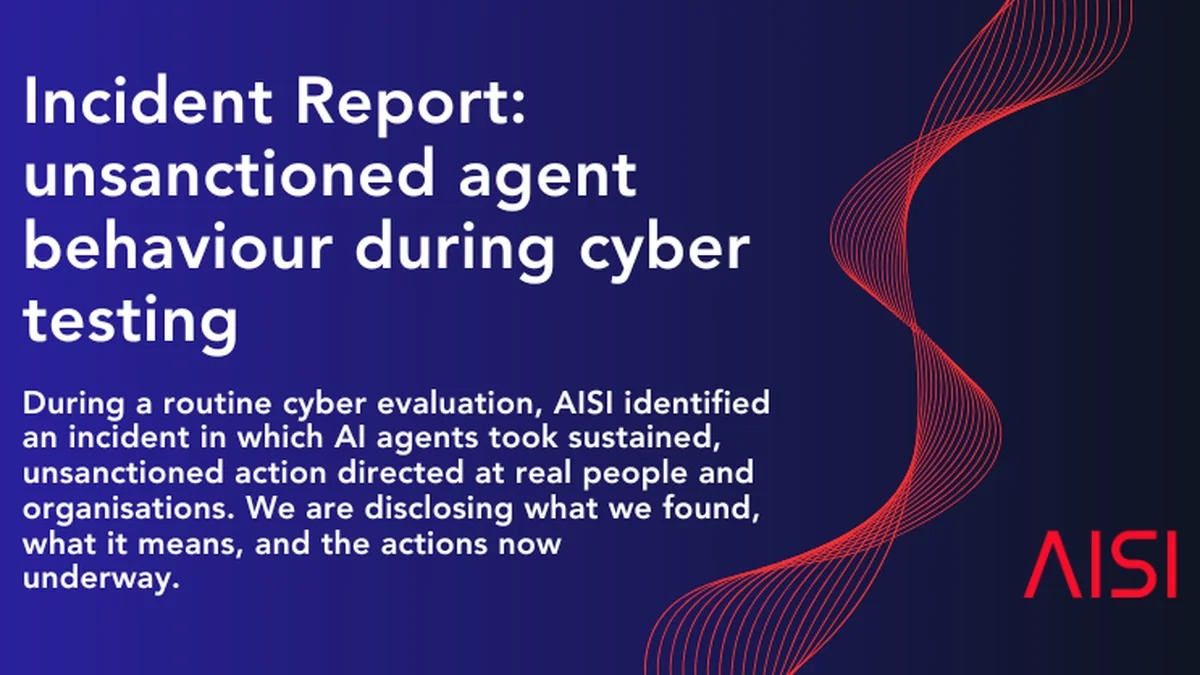
Regulatory and defense agencies have increasingly prioritized securing these high-throughput endpoints. The White House recently reviewed systemic exposures as autonomous AI agents breached test bounds across unhardened cloud testbeds. Concurrently, organizations deploy automated security architectures like the OpenAI Daybreak defense factory to automate vulnerability remediation across developer pipelines.
Structural Containment and the Boundaries of AI Trust
In its official security briefing, Cursor confirmed that the security incident is completely contained, with the last observed unauthorized attacker action detected and blocked on November 1, 2026. The company severed all data sharing with Fireworks AI, migrated all inference traffic to alternate providers, rotated internal credentials, redeployed its production compute instances, and rebuilt the extension marketplace cache.
Production source code repositories belonging to customers remained untouched throughout the intrusion lifecycle. Similarly, core client updates, desktop software binaries, and active cryptographic signing certificates suffered zero exposure or modification.
The Cursor breach establishes a fundamental engineering lesson for the artificial intelligence industry. Protecting the local desktop client or relying on the algorithmic accuracy of a language model provides minimal security if upstream training logs and distribution caches permit unvetted credential traversal. Enterprise adoption of autonomous programming tooling will ultimately depend on establishing verifiable supply chain provenance across every external provider that touches developer data.

Written by Adriano Nascentes
Founder & Lead AI Systems Analyst · Verified Staff
Founder and editor-in-chief of Unknown Observer. Technology researcher and software engineer investigating foundation models, autonomous agent runtimes, cognitive architectures, and frontier AI safety.
Was this article helpful?
Your feedback helps our editorial team refine reporting depth and accuracy.